HIPAA Alert: Potential Data Breach Learn More

Understanding Your Risk for Liver Cancer: Take This 5-Question Quiz from RCCA

More than 42,000 people in the United States will be diagnosed with cancer of the liver or its bile ducts this year, and approximately 30,980 Americans will die from the disease in 2026. 

See how well you understand the main risk factors for liver cancer by taking this 5-question, true-or-false format quiz composed by two medical oncologists practicing with Regional Cancer Care Associates (RCCA). Regional Cancer Care Associates (RCCA) is a group of more than 90 medical oncologists and hematologists who treat patients who have solid tumors, blood-based cancers, and benign blood disorders at more than 20 locations near you throughout New Jersey, Connecticut, and Massachusetts . 


Liver Cancer Risk Factor Quiz Questions

True or false:

  1. Most cases of liver cancer are the result of excessive alcohol use.
  2. Obesity is a risk factor for liver cancer.
  3. Taking excessive doses of pain relievers such as Tylenol® (acetaminophen) can cause liver cancer.
  4. Men are at higher risk for liver cancer than women.
  5. Beyond abstaining from or limiting alcohol use, there is little that people can do to reduce their chances of developing liver cancer.

Answers to Liver Cancer Risk Factors Quiz

  1. Most cases of liver cancer are the result of excessive alcohol use.
    False.
    “Heavy alcohol use is one of the main causes of liver cancer, but it is not responsible for the majority of cases,” says Manmeet Singh Ahluwalia, DO, a board-certified medical oncologist and hematologist practicing with RCCA at offices in Howell and Toms River, NJ.

    Dr. Ahluwalia explains that chronic infection from the hepatitis B and, particularly, hepatitis C viruses is the most frequent cause of liver cancer. He adds, however, that excessive alcohol use and those chronic viral infections both cause a common precursor to liver cancer – cirrhosis. The oncologist notes, “Cirrhosis is a severe scarring of the liver tissue that results from long-term damage and chronic inflammation. The scar tissue forms during the liver’s repeated attempts to repair damage. During those attempts, hepatic – or liver – cells can mutate into cancer.”

    “While chronic hepatitis infection may be responsible for more cases of liver cancer than alcohol, heavy drinking remains a significant risk factor for the disease, as well as for numerous other conditions, so either abstaining from alcohol or drinking only in moderation is important for reducing cancer risk and promoting overall health,” Dr. Ahluwalia says.

  2. Obesity is a risk factor for liver cancer.
    True.
    “One of the fastest growing causes of liver cancer is a condition called metabolic dysfunction-associated steatotic liver disease, or MASLD,” explains Victor Aviles, MD, a board-certified medical oncologist who practices with RCCA in North Falmouth, MA. He adds, “The condition, informally referred to as fatty liver disease, occurs when extra fat builds up in the liver. Like chronic hepatitis infections and heavy alcohol consumption, MASLD can lead to cirrhosis and, ultimately, liver cancer. MASLD is associated with being significantly overweight, making obesity a risk factor for liver cancer.”

  3. Taking excessive doses of pain relievers such as Tylenol® (acetaminophen) can cause liver cancer.
    False.
    Dr. Ahluwalia explains, “Acetaminophen toxicity is the most common cause of acute liver failure in the United States and is responsible for about 20% of liver transplants performed in the country. So, while it is important to carefully follow the dosing instructions for Tylenol – and for all over-the-counter and prescription medicines – the main liver-related concern with acetaminophen is not cancer but organ failure.

  4. Men are at higher risk for liver cancer than women.
    True.
    “Men are about twice as likely as women to develop primary liver cancer and intrahepatic bile duct cancer,” says Dr. Aviles. He adds that of the 42,340 new cases of the disease expected in 2026, an estimated 27,790 will occur in men versus 14,550 in women. The oncologist notes, “We don’t know to what extent this greater incidence in men reflects gender-specific biological factors versus differences in lifestyle behaviors. Nonetheless, it is important that men be aware of their increased risk for the disease.

  5. Beyond abstaining from or limiting alcohol use, there is little that people can do to reduce their chances of developing liver cancer.
    False.
    “There is a great deal that people can do to cut their risk for liver cancer,” says Dr. Aviles. He adds that these steps include:
    • Drinking alcohol in moderation, if at all.
    • Pursuing a healthy weight.
    • Undergoing one-time screening for hepatitis C by means of a blood test, with periodic repeat screening for people with ongoing risk factors, such as using injected or inhaled illicit drugs. 
    • Being vaccinated against hepatitis B if you are between the ages of 18 and 59 and did not receive the vaccine as a child, with adults age 60 and older talking with their physician about whether vaccination is advisable due to the presence of risk factors. 
    • Not smoking, as liver cancer is among the many, many risks of tobacco use. 
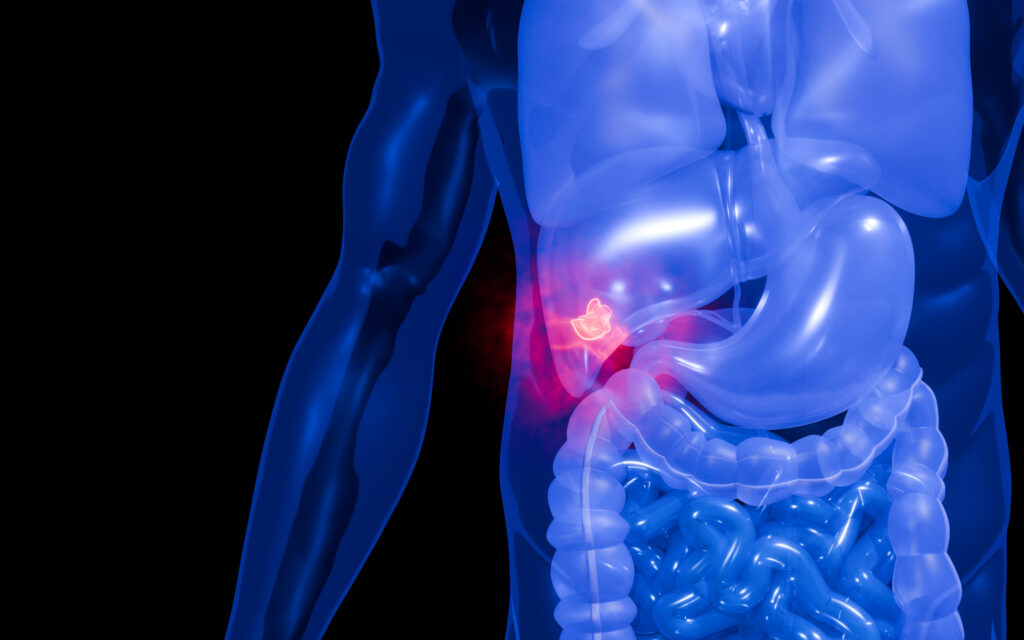
Illustration depicting liver cancer
“While we still need to make further progress against liver cancer, we are able to offer people more treatment options – and more cause for hope – than ever before.”
-- Manmeet Singh Ahluwalia, DO
“There is a great deal that people can do to reduce their risk for liver cancer.”
-- Victor Aviles, MD

What Treatments Are Available for Liver Cancer?

Dr. Ahluwalia adds, “Beyond knowing the main risk factors for liver cancer, people also should know that if they or a loved one are diagnosed with the disease, we have a wide array of treatments that enable us to individualize therapy to address each person’s specific situation and to pursue the best outcomes possible. These approaches include immunotherapies and highly refined chemotherapy regimens, as well as ultrasound- and energy-based treatments, and – in appropriate patients – an innovative intervention called chemoembolization. In this procedure, tiny ‘beads’ are delivered to the tumor through an artery. The beads release medication that acts directly on the cancer, while the beads themselves block blood flow to the tumor, depriving it of the oxygen and nutrients it needs to grow. Liver transplant also remains an important treatment option for many people with hepatocellular carcinoma, which is – by far – the most common type of liver cancer.”

The cancer specialist adds, “RCCA’s medical oncologists work closely with surgeons, interventional radiologists, and other specialists to identify and implement the optimal treatment approach for each patient. While prevention is the primary and preferred strategy for liver cancer, as it is for all conditions, and while we still need to make further progress against the disease, we are able to offer people more treatment options – and more cause for hope – than ever before.”


Find Expert Liver Cancer Care Near You in NJ, CT, & MA

Dr. Ahluwalia and Dr. Aviles are among 90+ medical oncologists and hematologists who practice with Regional Cancer Care Associates (RCCA), one of the nation’s largest networks of oncology specialists. RCCA has more than 20 locations near you across New Jersey, Connecticut, and Massachusetts. RCCA’s cancer specialists see more than 30,000 new patients each year and provide care to more than 265,000 established patients, collaborating closely with those patients’ other physicians. RCCA physicians offer patients innovative therapies, including immunotherapies and targeted therapy, as well as access to approximately 300 clinical trials. In addition to serving patients who have solid tumors, blood-based cancers, and benign blood disorders, RCCA care centers also provide infusion services to people with a number of non-oncologic conditions—including multiple sclerosis, Crohn’s disease, asthma, iron-deficiency anemia, and rheumatoid arthritis—who take intravenously-administered medications.

To learn more about RCCA, call 844-346-7222 or contact RCCA.

References

American Cancer Society. Key Statistics About Liver Cancer. January 13, 2026. Available at https://www.cancer.org/cancer/types/liver-cancer/about/what-is-key-statistics.html. Accessed September 22, 2026.


American Cancer Society. Liver Cancer Risk Factors. February 11, 2025. Available at https://www.cancer.org/cancer/types/liver-cancer/causes-risks-prevention/risk-factors.html. Accessed September 22, 2026.


Centers for Disease Control and Prevention (CDC). Hepatitis B Vaccine. September 18, 2025. Available at https://www.cdc.gov/hepatitis-b/vaccination/. Accessed September 22, 2026.


National Cancer Institute. Cancer Stat Facts: Liver and Intrahepatic Bile Duct Cancer. Available at https://seer.cancer.gov/statfacts/html/livibd.html. Accessed September 22, 2026. 


National Cancer Institute. Liver Cancer Causes, Risk Factors, and Prevention. May 15, 2024. Available at https://www.cancer.gov/types/liver/what-is-liver-cancer/causes-risk-factors. Accessed September 22, 2026.


Schaffer DH, Murray BP, Khazaeni B. Acetaminophen toxicity. StatPearls. Available at https://www.ncbi.nlm.nih.gov/books/NBK441917/. Accessed September 22, 2026.

we are here for you

For more information or to schedule an appointment,
call 844-346-7222. You can also schedule an appointment by calling the RCCA location nearest you.

RELATED ARTICLES

Regional Cancer Care Associates is one of fewer than 200 medical practices in the country selected to participate in the Oncology Care Model (OCM); a recent Medicare initiative aimed at improving care coordination and access to and quality of care for Medicare beneficiaries undergoing chemotherapy treatment.