HIPAA Alert: Potential Data Breach Learn More

Recommending an Oncologist to Your Patient: How the ACE Framework Can Help

Telling a patient that she has or may have cancer can be one of the most challenging tasks a physician faces. And what typically follows — recommending an oncologist — can be one of the most important services a physician provides to that patient.

Whether you are a primary care physician evaluating concerning blood work results, a gastroenterologist reviewing a colonoscopy biopsy report, or a dermatologist who has identified recurrent melanoma, that recommendation or referral sets the trajectory for the person’s entire cancer journey.

Regional Cancer Care Associates (RCCA) is a group of more than 90 medical oncologists and hematologists who treat patients who have solid tumors, blood-based cancers, and benign blood disorders at more than 20 locations near you throughout New Jersey, Connecticut, and Massachusetts. Two medical oncologists with RCCA say that employing a decision-making framework known as ACE can help clinicians take a comprehensive approach to making a truly individualized referral.

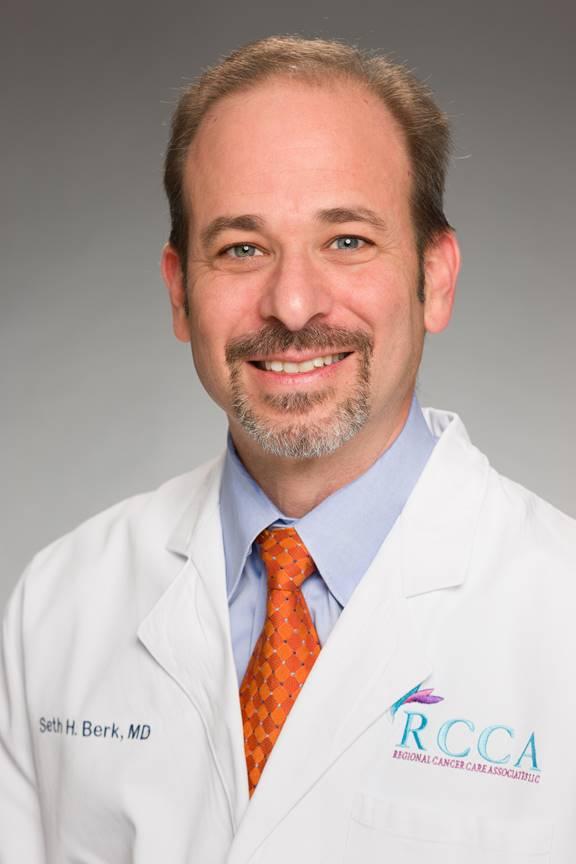
“ACE is an acronym that stands for access, collaboration/communication, and experience/expertise,” explains Seth H. Berk, MD, a board-certified medical oncologist and hematologist who practices at RCCA’s Moorestown, NJ, offices and serves as RCCA’s Board Chairperson.


The Importance of Access to Cancer Care

Dr. Berk adds, “The access component of the acronym encompasses four important considerations. First, is the oncologist you are considering in the patient’s insurance plan? If not, there are going to be considerable, potentially unsustainable, financial toxicities entailed in going out of network. Second, how quickly can the patient be seen for an initial consultation, can all required additional testing be conducted, and can a care plan be developed and implemented? Third, does the clinician offer access to the latest therapies being used to treat the patient’s condition and to clinical trials evaluating new approaches to treatment? Fourth and finally, access is a matter of proximity. Is the oncologist located within a reasonable distance from the patient’s home? This is a huge consideration not only in terms of quality of life but also for provision of care. To cite one example, a patient experiencing a side effect may decide not to call the oncologist’s office to report the problem if he thinks he will be told to drive an hour or more to an academic medical center in a large city at a time when he feels miserable. By comparison, if his oncologist is located 10 or 15 minutes away, that patient will be much more likely to seek help — and to be seen promptly, if needed.”


How Collaboration and Communication Enhance Cancer Treatment

Niloo Prasad, MD, a board-certified medical oncologist who practices at RCCA’s Edison, NJ, office notes that the C in the ACE acronym stands for collaboration and communication. Dr. Prasad says, “I can’t remember the last time I saw a patient with cancer who didn’t have at least one comorbidity, whether that be hypertension, diabetes, asthma, or some other chronic condition. We appreciate how hard our primary care and other colleagues work to manage these conditions, and we know that the oncologic therapies we use can have significant drug-drug interactions or otherwise affect patients’ overall health. For this reason, we collaborate closely with a patient’s other providers, informing them of our treatment plan and the implications it has for the conditions they treat, and consulting with them frequently in terms of any indicated dosage adjustments and similar steps.”

Dr. Prasad adds that one advantage of practicing oncology in the community setting is close working relationships with a patient’s other physicians. “In many cases, my patients’ primary care providers, cardiologists, endocrinologists, or other physicians are on staff at the same hospital where I practice, and I typically have known them for many years. Further, we often share a common electronic medical record, which can greatly facilitate collaboration for whole-person care.”

She adds that when considering a referral, an oncologist’s skill in communicating with the patient and the patient’s caregivers can be even more important than how well the specialist interacts with colleagues. “Cancer is a complex disease that affects every facet of a person’s life. Similarly, the therapies we now have to treat cancer, while offering greater efficacy than ever before, often have mechanisms of action with systemic effects and can have significant side effect profiles. Beyond his or her clinical acumen and technical skills, an oncologist needs to be a clear, patient, and compassionate communicator to engage the patient in shared decision-making and deliver optimal care. That’s an intangible, but it’s an invaluable one,” Dr. Prasad says.

Oncologist and patient discuss treatment plan
“More than 80% of cancer care is delivered in the community setting, giving community oncologists extensive experience in managing the great majority of solid tumors and hematologic malignancies. At the same time, I don’t know of any community oncologist who would not promptly refer a patient to an academic medical center if that patient had a very rare cancer unfamiliar to the doctor or had some underlying condition that created a need for super-specialized care.”
-- Seth H. Berk, MD
“We collaborate closely with a patient’s other providers, informing them of our treatment plan and the implications it has for the conditions they treat, and consulting with them frequently in terms of any indicated dosage adjustments and similar steps.” -- Niloo Prasad, MD

Expertise and Experience Are Key Components of Cancer Treatment

Dr. Berk notes that the third set of factors to consider involve experience and expertise. He explains, “This starts with board-certification or board-eligibility status but really centers on how much experience the oncologist has in managing the patient’s particular diagnosis. More than 80% of cancer care is delivered in the community setting, giving community oncologists extensive experience in managing the great majority of solid tumors and hematologic malignancies, both common and less-common. At the same time, I don’t know of any community oncologist, whether practicing with RCCA or elsewhere, who would not promptly refer a patient to an academic medical center if that patient had a very rare cancer unfamiliar to the doctor or had some underlying condition that created a need for super-specialized care. As oncologists, we want our patients to receive the best care available, regardless of where or by whom it is delivered. For the great majority of patients, such care is available in the community setting, but when a patient would benefit from obtaining care elsewhere, we do not hesitate to make the appropriate referral.”

The Regional Caner Care Associates Board Chairperson adds, “We have purposely structured RCCA around this ACE framework to ensure that patients turning to us receive accessible, prompt, and comprehensive care marked by treatment with the latest evidence-based therapies, the opportunity to participate in clinical trials, and strong relationships with expert oncologists and other care team members who know our patients well, communicate with them clearly, treat them with respect and compassion, and collaborate effectively with their other physicians.” 

Dr. Berk concludes, “At RCCA, we are committed to ‘being there’ for our patients’ providers as well as for the patient themselves. That includes availability for quick consultations when a clinician has a cancer-related question or is determining how best to manage a cancer patient’s comorbid conditions. Individualizing our decision-making – from choice of treatment to choice of referral – is key to providing patients with the best possible outcomes.”


Find Expert Cancer Care Near You in NJ, CT, MA, and the Washington, D.C., Area

Dr. Berk and Dr. Prasad are among 90+ medical oncologists and hematologists who practice with Regional Cancer Care Associates (RCCA), one of the nation’s largest networks of oncology specialists. RCCA has more than 20 locations near you across New Jersey, Connecticut, and Massachusetts. RCCA’s cancer specialists see more than 30,000 new patients each year and provide care to more than 265,000 established patients, collaborating closely with those patients’ other physicians. RCCA physicians offer patients innovative therapies, including immunotherapies and targeted therapy, as well as access to approximately 300 clinical trials. In addition to serving patients who have solid tumors, blood-based cancers, and benign blood disorders, RCCA care centers also provide infusion therapy services to people with a number of non-oncologic conditions—including multiple sclerosis, Crohn’s disease, asthma, iron-deficiency anemia, and rheumatoid arthritis—who take intravenously-administered medications.

To learn more about RCCA, call 844-346-7222 or contact RCCA. 

The ACE Framework for Individualizing Oncology Referrals

  • A – Access
      • Participation in the patient’s insurance plan
      • Timely availability of initial appointment and subsequent care
      • Provision of latest evidence-based therapies and opportunity to enroll in clinical trials
      • Proximity to patient’s home

  • C – Collaboration/Communication
      • Ability and willingness to collaborate with patients’ other providers
      • Ease of communication with other providers (e.g., shared electronic medical record, practicing in same hospital and/or community)
      • Good communications skills with patients and caregivers 
      • Willingness to engage in shared decision-making with the patient

  • Experience/Expertise
    • Board certification
    • Experience managing specific diagnosis
    • Practice emphasis or specialization, in the case of rare or uncommon cancers 
    • Expertise in managing patients with key underlying or comorbid conditions (e.g., rare developmental or genetic disorders that predispose a person to cancer and that require consideration in developing a treatment plan) 

we are here for you

For more information or to schedule an appointment,
call 844-346-7222. You can also schedule an appointment by calling the RCCA location nearest you.

RELATED ARTICLES

Regional Cancer Care Associates is one of fewer than 200 medical practices in the country selected to participate in the Oncology Care Model (OCM); a recent Medicare initiative aimed at improving care coordination and access to and quality of care for Medicare beneficiaries undergoing chemotherapy treatment.