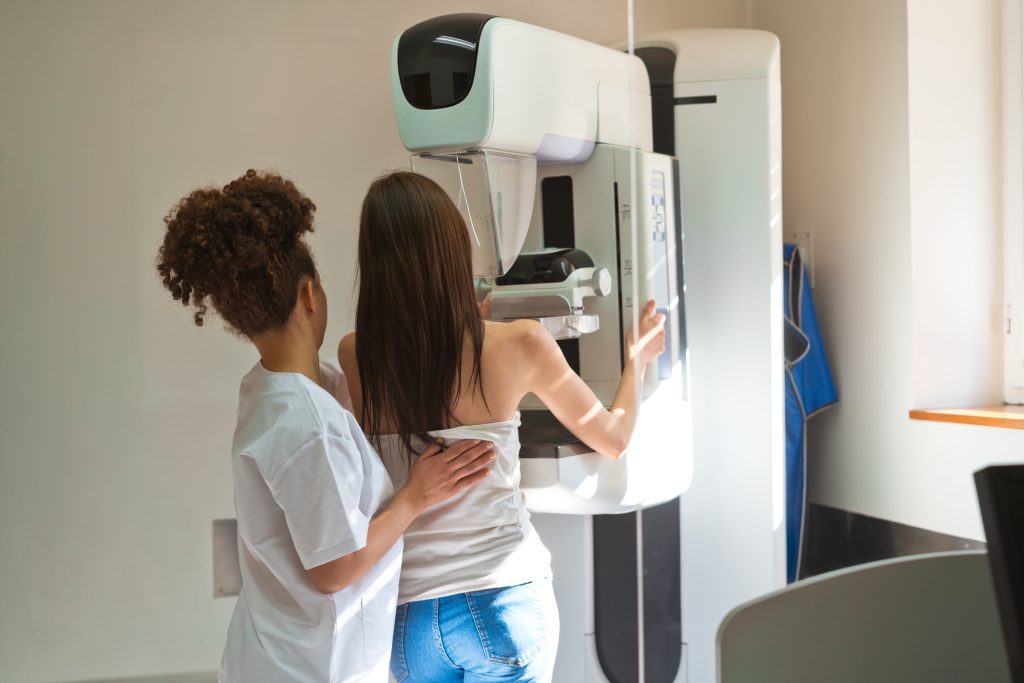
She adds, “Despite this rising incidence of breast cancer, 38% of women aged 40 to 49 years were not up to date with recommended screening in 2023. By contrast, 79% of women aged 50 to 64 and 82% of those ages 65 to 74 were on schedule.5 I recognize that the forties are ‘prime time’ for having to deal with multiple demands involving work and potentially young children and aging parents, but there’s an analogy to be found in the advice that the flight attendants provide before a plane takes off: First put on your own oxygen mask, then help others. If we want to ‘be there’ for the people and things we care about, we first have to ‘be there’ for ourselves and our own health.”
Sorting Out Breast Cancer Screening Recommendations
So, when should a woman begin breast cancer screening?
Dr. Prasad says, “Many of the screening recommendations issued by various organizations have changed in recent years, and there are some subtle differences in those groups’ guidelines in terms of the starting age for screening and screening frequency, which can contribute to women being uncertain about how to proceed.”
The cancer specialist explains, however, that recommendations for women at average risk of developing breast cancer include:
- United States Preventive Services Task Force: Women should be screened for breast cancer every other year starting at age 40 and continuing through age 74.6
- American Cancer Society: Women ages 40 to 44 have the option to start screening with a mammogram every year. Women ages 45 to 54 should have a mammogram every year.7
- American College of Obstetricians & Gynecologists. Individuals should begin screening mammography at age 40 and have follow-up mammograms every one to two years.8
“I want to emphasize that these recommendations are specifically for women considered to be at average risk for breast cancer,” Dr. Prasad says. She adds, “Several factors, including a strong family history of the disease or the presence of a genetic mutation such as BRCA1 or BRCA2, can put a woman at elevated risk, which will affect when she should start screening as well as how and how often screening should be performed. It is important to talk with your primary care provider or Ob/Gyn about the screening schedule that is appropriate for you.”
Embracing Hope, Rejecting Regret
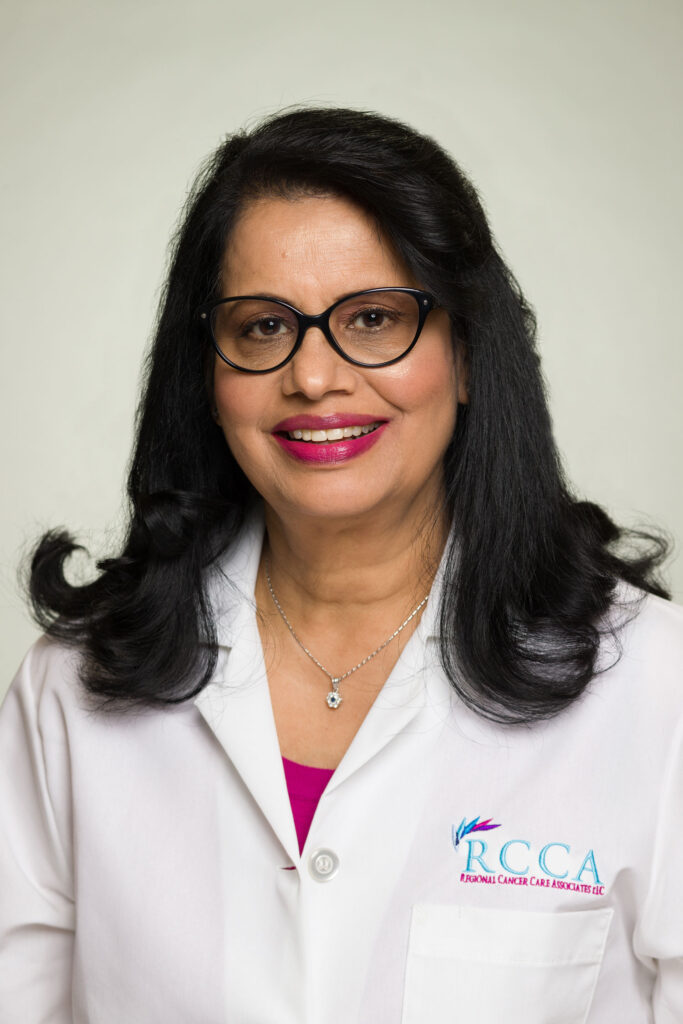
Dr. Prasad continues, “I realize that having that first mammogram can be a daunting prospect for some women. However, this year, more than 320,000 women across the United States will learn that they have breast cancer, including an estimated 9,510 women here in New Jersey,9 where I practice. The past several years have seen dramatic gains in our ability to treat breast cancer at all stages, and at RCCA we work closely with our surgical and radiation oncology colleagues to provide women with comprehensive care, including offering them the latest in immunotherapy, targeted therapy, hormonal therapy, and clinical trials. Nonetheless, earlier identification and intervention continue to be associated with better treatment outcomes, so I really encourage women to begin screening as soon as they reach the indicated age.”
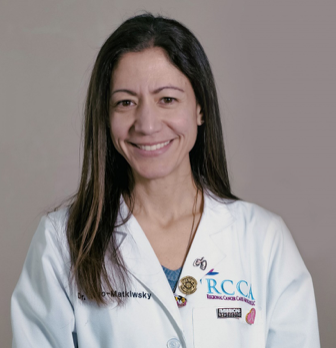
Dr. Abdo-Matkiwsky adds, “When I meet with patients newly diagnosed with cancer, many are very focused on the why. There’s something deep in our nature that wants to make sense of bad news, to identify a cause-and-effect relationship. In truth, while we understand risk factors at a population level, we generally cannot say definitively what caused a specific person to develop cancer, and even if we could, the focus following diagnosis needs to be on looking forward and on what we can do, not on what perhaps should have been done in the past. So often, however, I hear people say, ‘If only I had done this or hadn’t done that.’ As an oncologist, I’m in the business of hope, not of regret, much less guilt. I don’t want patients to spend their time or energy on those emotions, including by wondering if cancer could have been identified at an earlier stage if they had started screening earlier or had received subsequent screenings on schedule. Making time for yourself by having ‘on time’ screenings is a key step not only for protecting your physical health but also in giving yourself peace of mind now and going forward.”
Find Expert Breast Cancer Care Near You in New Jersey, Connecticut, Massachusetts, and the Washington, D.C., Area
Dr. Abdo-Matkiwsky and Dr. Prasad are among 90+ medical oncologists and hematologists who practice with Regional Cancer Care Associates (RCCA), one of the nation’s largest networks of oncology specialists. RCCA has more than 20 locations near you across New Jersey, Connecticut, Massachusetts, and the Washington, D.C. area. RCCA’s cancer specialists see more than 30,000 new patients each year and provide care to more than 265,000 established patients, collaborating closely with those patients’ other physicians. RCCA physicians offer patients innovative therapies, including immunotherapies and targeted therapy, as well as access to approximately 300 clinical trials. In addition to serving patients who have solid tumors, blood-based cancers, and benign blood disorders, RCCA care centers also provide infusion services to people with a number of non-oncologic conditions—including multiple sclerosis, Crohn’s disease, asthma, iron-deficiency anemia, and rheumatoid arthritis—who take intravenously-administered medications.
To learn more about RCCA, call 844-346-7222 or contact RCCA.
References:
- Ma Z. He W, Zhang Y, et al. First mammography screening participation and breast cancer incidence and mortality in the subsequent 25 years: population based cohort study. BMJ. 2025;390:e085029.
- Duffy SW, Tabar L, Yen AM-F, et al. Beneficial effect of consecutive screening mammography examinations on mortality from breast cancer: a prospective study. Radiology. 2021; 299:541–547.
- National Cancer Institute. Surveillance, Epidemiology, and End Results Program. Cancer Stat Facts: Female Breast Cancer. Available at https://seer.cancer.gov/statfacts/html/breast.html. Accessed February 11, 2026.
- Centers for Disease Control and Prevention (CDC). United States Cancer Statistics. Breast Cancer Among Women Younger Than 45. Available at https://www.cdc.gov/united-states-cancer-statistics/publications/breast-cancer-among-young-women.html. Accessed February 11, 2026.
- Sabatino SA, Thompson TD, Croswell JM, et al. Use of cancer screening tests, United States, 2023. Prev Chronic Dis. 2025;22:250139. DOI: http://dx.doi.org/10.5888/pcd22.250139.
- United States Preventive Services Task Force. Final Recommendation Statement. Breast Cancer: Screening. April 30, 2024. Available at https://www.uspreventiveservicestaskforce.org/uspstf/recommendation/breast-cancer-screening. Accessed February 11, 2026.
- American Cancer Society. American Cancer Society Recommendations for the Early Detection of Breast Cancer. December 19, 2023. Available at https://www.cancer.org/cancer/types/breast-cancer/screening-tests-and-early-detection/american-cancer-society-recommendations-for-the-early-detection-of-breast-cancer.html. Accessed February 11, 2026.
- American College of Obstetricians & Gynecologists. ACOG Updates Recommendation on When to Begin Breast Cancer Screening Mammography. October 10, 2024. Available at https://www.acog.org/news/news-releases/2024/10/acog-updates-recommendation-when-to-begin-breast-cancer-screening-mammography. Accessed February 11, 2026.
- American Cancer Society. Cancer Facts & Figures 2026.