Exercise and Lymphedema
Many breast cancer survivors have misconceptions about exercise and lymphedema. “Many years ago, oncologists advised breast cancer survivors to avoid resistance and aerobic exercises due to concerns that the physical activity could provoke or exacerbate lymphedema. Several studies have since allayed those concerns within the medical community, but the idea still has considerable traction among patients,” Dr. Levenbach says.
In fact, the cancer specialist adds, structured strength training optimizes the mechanical “muscle pump” action around deep lymphatic vessels, which actually improves extracellular fluid clearance and can prevent functional shoulder limitations.
“As with so much in medicine and in life, common sense and moderation are key when it comes to exercise for breast cancer survivors,” says Dr. Levenbach. She explains, “For example, patients should be advised to start slow, ‘listen’ to their bodies, and increase their exercise intensity gradually. They also should wear a physician- or therapist-recommended compression garment during exercise to offset any exercise-induced capillary filtration.” Dr. Levenbach adds that referral to an exercise physiologist or physical therapist who has experience in working with breast cancer survivors can be particularly helpful in encouraging patients to adopt an individualized physical activity plan.
Diagnosing BCRL with a Tape Measure
A tape measure often will suffice for diagnosing BCRL. Dr. Graham says that while imaging plays a key role in the ongoing monitoring of breast cancer survivors, a lower-tech tool – the tape measure – can reliably confirm the presence of lymphedema in many cases.
“I recommend performing serial, bilateral circumferential measurements of the arms at a few fixed points, such as at the metacarpophalangeal joints, wrists, 10 cm distal to the olecranon, and 10 cm proximal to the olecranon. A difference of 2 cm or greater at any corresponding point, or a calculated volumetric discrepancy of >10% between the affected and unaffected limbs, indicates lymphedema,” Dr. Graham says. The medical oncologists adds that when questions remain after bilateral measurement of the limbs, referral for more sophisticated assessments, such as bioimpedance analysis, is indicated.
How Is Lymphedema Treated?
Complete decongestive therapy (CDT) remains the preferred first-line intervention for lymphedema. Once BCRL is identified, prompt – and ongoing – management is needed. “Complete decongestive therapy is a multimodal, conservative intervention designed to maximize lymphatic diversion and is the preferred initial approach to treatment,” Dr. Graham says.
The medical oncologist adds that CDT is best coordinated by a Certified Lymphedema Therapist (CLT) and entails two phases:
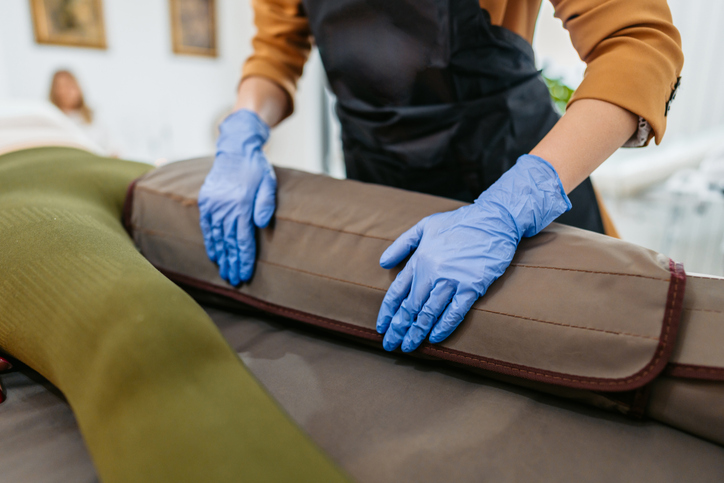
- Phase I – Intensive Decongestion: Typically lasting 2 to 8 weeks, this phase focuses on reducing limb volume. Dr. Graham explains that it combines daily manual lymphatic drainage (MLD)—a light, rhythmic skin-stretching massage that redirects fluid to functional lymphotomes—with short-stretch, multi-layer compression bandaging, skin hygiene, and targeted exercises.
- Phase II – Maintenance: Self-management predominates in this phase. While maintenance regimens are individualized based on each patient’s specific needs, they often encompass wearing custom-fitted, flat-knit compression garments during the day, utilizing adjustable wraps at night, performing self-administered MLD, and maintaining good skin health, Dr. Graham notes.
Be Alert for Signs of Cellulitis
Cellulitis is an ever-present concern. Dr. Levenbach notes that the long-term management of BCRL focuses on the prevention and aggressive treatment of secondary dermatological infections. “Because lymphostasis impairs localized immune surveillance, the lymphedematous limb is highly vulnerable to bacterial entry,” she says, stressing that cellulitis in a lymphedematous limb is a medical emergency that can rapidly induce systemic sepsis and permanently damage remaining lymphatic channels. “We need to educate our patients to be alert to the prodromal systemic signs of infection, explaining to them that fever, shivering, other flu-like symptoms, or sudden malaise can be the first indicators of cellulitis, emerging before the classic localized signs such as erythema, warmth, and pain,” she says.
Dr. Graham says, “Lymphedema is among the most physically debilitating and psychologically distressing complications of breast cancer. While advanced surgical techniques such as lymphovenous anastomosis and vascularized lymph node transfer are offering new hope to patients with advanced or refractory cases, conservative measures will suffice for most breast cancer survivors with BCLR. With close communication and collaboration, primary care clinicians and medical oncologists can protect the physical health and enhance the quality of life of our patients experiencing lymphedema.”
Find Expert Breast Cancer Care Near You in NJ, CT, MA, and the Washington, D.C., Area
Dr. Graham and Dr. Levenbach are among 90+ medical oncologists and hematologists who practice with Regional Cancer Care Associates (RCCA), one of the nation’s largest networks of oncology specialists. RCCA has more than 20 locations near you across New Jersey, Connecticut, Massachusetts, and the Washington, D.C., area. RCCA’s cancer specialists see more than 30,000 new patients each year and provide care to more than 265,000 established patients, collaborating closely with those patients’ other physicians. RCCA physicians offer patients innovative therapies, including immunotherapies and targeted therapy, as well as access to approximately 300 clinical trials. In addition to serving patients who have solid tumors, blood-based cancers, and benign blood disorders, RCCA care centers also provide infusion services to people with a number of non-oncologic conditions—including multiple sclerosis, Crohn’s disease, asthma, iron-deficiency anemia, and rheumatoid arthritis—who take intravenously-administered medications.
To learn more about RCCA, call 844-346-7222 or contact RCCA.