HIPAA Alert: Potential Data Breach Learn More

2 RCCA Oncologists Tell How Immunotherapies Are Increasing Survival in Advanced Melanoma

Immunotherapies and other treatment advances have more than doubled the survival rate for advanced melanoma over the past 20 years, according to two board-certified medical oncologists with Regional Cancer Care Associates (RCCA), one of the nation’s largest networks of oncology specialists, serving patients in New Jersey, Connecticut, Massachusetts, and the Washington, D.C., area.

Andrew Bernstein, DO, says, “The 5-year relative survival rate for distant melanoma, meaning cancer that had spread far from where it first appeared, has increased from 15% two decades ago to 35% in recent years. While that is still not nearly high enough, the breakthroughs that drove that improvement and new therapies now in development give us every reason to expect the rate to continue to climb.”

Dr. Bernstein, who practices at RCCA’s Riverdale, NJ, office, explains, “Surgery is the first-line treatment for melanoma. Surgical excision typically is the only intervention needed for melanoma in situ, the term we use when cancerous cells are confined to the outermost layer of the skin, the epidermis. Similarly, surgery can be curative when invasive melanoma – cancer that has spread beyond that outer skin layer – is in its early stages. Surgery also is used to assess nearby lymph nodes for signs of cancer and to remove affected nodes. However, when melanoma is deeply invasive or has reached the lymph nodes, we consider additional approaches, including immunotherapy, targeted therapy, and radiation therapy. And these systemic therapies are at the forefront of our care plans when we’re treating melanoma that has spread regionally or to distant parts of the body.”

Ethan Wasserman, MD, who practices with RCCA at offices in Howell, Neptune, and Toms River, NJ, adds that while recent years have been marked by advances in all of the approaches used to treat invasive melanoma, the gains achieved with immunotherapies have been particularly dramatic.

“While the FDA approved two early-generation immunotherapies to treat metastatic melanoma in the second half of the 1990s, the modern era of melanoma immunotherapy really began in 2011, with approval of ipilimumab, or Yervoy®, which belongs to a class of immunotherapies known as checkpoint inhibitors,” he notes.

Dr. Wasserman explains that the body’s immune system engages in constant monitoring, with specialized cells known as T cells on the alert for bacteria, viruses, cancer cells, or similar sources of harm.

He continues, “When T cells identify a threat, they either destroy it themselves or signal other immune cells to attack. Sometimes, however, the T cells get it wrong. Think of an alarm system that goes off and summons the police to your home not just when a burglar breaks a window but every time a strong wind rattles that window. In the body, such misreadings of the situation can cause immune cells to attack healthy tissues. To protect against that, proteins on the surface of T cells act as checkpoints, with the ability to ‘switch off’ the cells to guard against false alarms.”

“Here’s where it gets a little complicated,” he adds. “Cancer cells can take advantage of this safety feature by creating proteins of their own that lock onto T cells’ checkpoint proteins and effectively flip the switch to the off position, deactivating the T cells and allowing cancer to grow and spread undetected. Checkpoint inhibitor medications reverse this process, enabling T cells to once again recognize cancer and mount an attack.”

The FDA approved ipilimumab for treatment of metastatic melanoma after a Phase III trial involving 676 patients showed that the immunotherapy increased survival by several months compared to another therapy. Since then, additional checkpoint inhibitors targeting different chemical checkpoints have been developed.

“Some of the largest improvements in survival have come from using two of these immunotherapies in combination with one another,” Dr. Wasserman says. He notes, “The CheckMate 067 study compared outcomes when people with untreated advanced melanoma were treated with ipilimumab alone, with another checkpoint inhibitor – nivolumab (Opdivo®) – alone, or with a combination of the two. After 10 years of follow-up, median overall survival was 71.9 months with the combination treatment versus 36.9 months for nivolumab alone and 19.9 months for ipilimumab.”

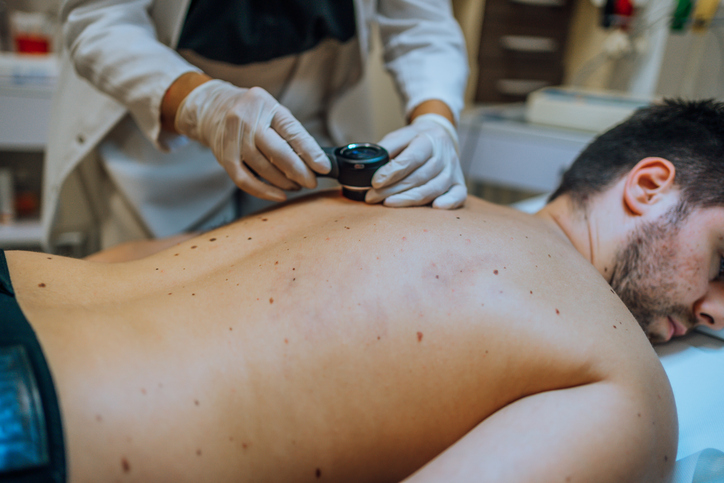
Dermatologist examines patient’s skin
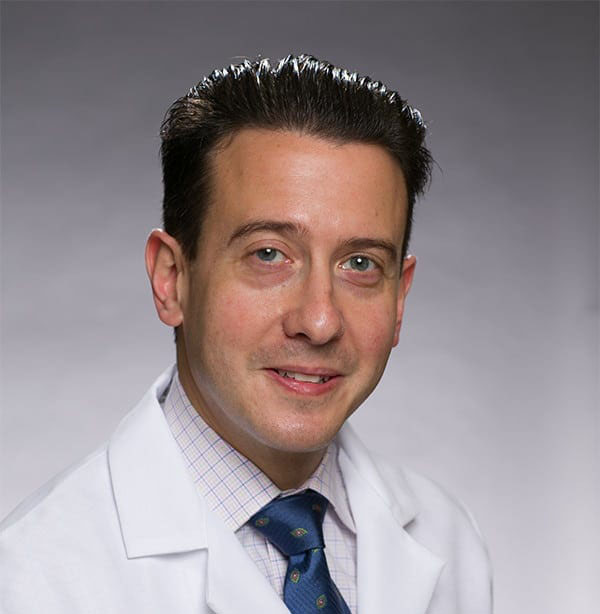
Portrait of Andrew M. Bernstein, DO
“We are able to offer people with advanced melanoma more treatments, more cause for hope, and better outcomes than ever before, and we expect that further progress is on the near horizon.” Andrew Bernstein, DO
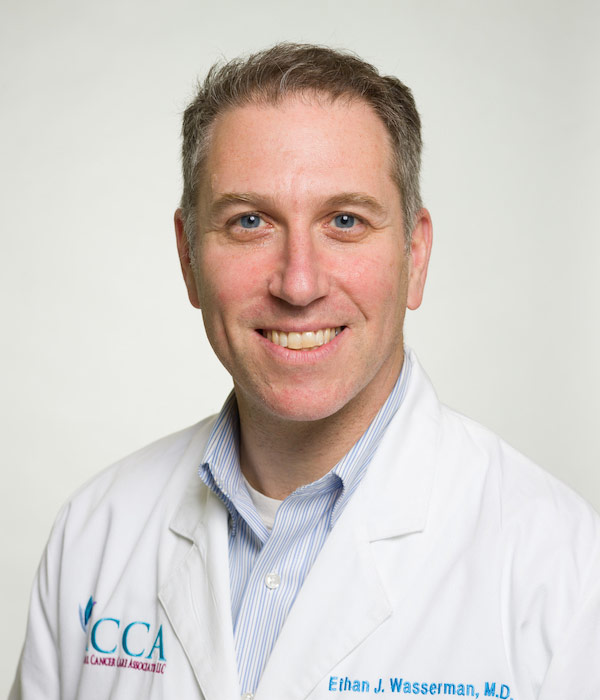
Portrait of Ethan Wasserman, MD
“Some of the largest improvements in survival have come from using immunotherapies in combination with one another.” Ethan Wasserman, MD

Bringing Treatment Advances to Community-Based Cancer Care

Dr. Bernstein says that the impact immunotherapies have had on people with advanced melanoma owes not only to the effectiveness of those medications but also to their availability in community-based care centers close to people’s homes.

“Therapies that revolutionize the treatment of a deadly cancer command significant attention from the media, as well they should, but those scientific breakthroughs have been accompanied by a sort of ‘quiet revolution’ in which patients now have ready access to advanced treatments in their own communities, so that they don’t have to travel to a major academic medical center in a large city to receive the latest in care,” he says.

He adds, “The oncologists at RCCA’s community-based centers have extensive experience in using immunotherapies, targeted therapies, and other cutting-edge treatment modalities. We develop individualized care plans to offer patients the best possible outcomes and to maintain quality of life. We also draw on that experience to minimize and manage any side effects of immunotherapy, which can include fatigue, skin rashes, diarrhea, and joint pain.” 

Dr. Bernstein continues that RCCA’s oncologists and their colleagues across the country are likely to have additional melanoma therapies to offer patients in the years and perhaps even months just ahead. “This is a very active area of cancer research, and RCCA is committed to offering patients the latest treatment advances, both through our clinical trials program and our rapid integration of newly approved therapies into our treatment regimens.”

The Best Approaches to Melanoma: Prevention, Early Detection and Treatment

Dr. Wasserman says that while the outlook for treating advanced melanoma continues to improve, prevention and early detection and treatment of skin cancers remain the cornerstones of protecting people’s health.

“Common sense measures are key, such as applying sunscreen, wearing protective clothing when you’re going to be exposed to the sun for any length of time and – in particular – not using tanning beds,” the medical oncologist says. He adds that childhood sun exposure is a risk factor for developing melanoma later in life, so that people who had sunburns in their early years should be particularly vigilant in monitoring for potential melanomas. Dr. Wasserman explains that people should scan their bodies periodically, using the ABCDE method to assess a spot or mole:

  • A – Asymmetry: One half of the mole or spot does not match the other half.
  • B – Border: The edges are irregular, scalloped, notched, or blurred.
  • C – Color: The color is uneven and may include different shades of brown or black, or patches of pink, red, white, or blue.
  • D – Diameter: The spot is larger than 6 mm (about the size of a standard pencil eraser), although melanomas can sometimes be smaller.
  • E – Evolution: The mole is changing in size, shape, color, or elevation. It may also begin to itch, crust, or bleed.

Dr. Wasserman stresses that people should see their primary care provider or dermatologist promptly if they identify a concerning mole. He also encourages people to consider having a dermatologist conduct a full body skin examination. “These exams are particularly important for people who have a history of multiple blistering or otherwise severe sunburns or a family history of melanoma,” he says. The oncologist adds that while melanoma is significantly more common in fair-skinned people than others, the cancer can affect people with any skin tone or racial and ethnic background, making it important for all people to see a physician if they identify a suspicious mole.

Dr. Bernstein says, “This year, approximately 112,000 people across the United States will be diagnosed with invasive melanoma. About three-quarters of those cases will involve localized disease, which carries a 5-year relative survival rate approaching 100%. While that rate declines for people who have regionalized or distant disease at the time of diagnosis, we are able to offer people with advanced melanoma more treatments, more cause for hope, and better outcomes than ever before, and – as noted – we expect that further progress is on the near horizon.”

Find Expert Skin Cancer Care Near You in NJ, CT, MA, and the Washington, D.C., Area

Dr. Bernstein and Dr. Wasserman are among 90+ medical oncologists and hematologists who practice with Regional Cancer Care Associates (RCCA), one of the nation’s largest networks of oncology specialists. RCCA has more than 20 locations near you across New Jersey, Connecticut, Massachusetts, and the Washington, D.C., area. RCCA’s cancer specialists see more than 30,000 new patients each year and provide care to more than 265,000 established patients, collaborating closely with those patients’ other physicians. RCCA physicians offer patients innovative therapies, including immunotherapies and targeted therapy, as well as access to approximately 300 clinical trials. In addition to serving patients who have solid tumors, blood-based cancers, and benign blood disorders, RCCA care centers also provide infusion services to people with a number of non-oncologic conditions—including multiple sclerosisCrohn’s diseaseasthma, iron-deficiency anemia, and rheumatoid arthritis—who take intravenously-administered medications.

To learn more about RCCA, call 844-346-7222 or contact RCCA today.

References

Melanoma By the Numbers

All statistics are for the United States and, unless otherwise noted, for 2026.

  • Estimated new diagnoses: 112,000
  • Percentage of all new cancer diagnoses: 5.3%
  • Median age at diagnosis: 67 years
  • Percentage of patients with regional or distant disease at diagnosis: 15%
  • Estimated number of deaths: 8,510
  • Percentage of all cancer deaths: 1.4%
  • 5-year overall relative survival rate 2016-2022: 94.7%
  • Estimated number of melanoma survivors in 2023: 1,573,288

Source: National Cancer Institute. Surveillance, Epidemiology, and End Results (SEER) Program. Cancer Stat Facts: Melanoma of the Skin. Available at https://seer.cancer.gov/statfacts/html/melan.html. Accessed July 19, 2026.

we are here for you

For more information or to schedule an appointment,
call 844-346-7222. You can also schedule an appointment by calling the RCCA location nearest you.

RELATED ARTICLES

Regional Cancer Care Associates is one of fewer than 200 medical practices in the country selected to participate in the Oncology Care Model (OCM); a recent Medicare initiative aimed at improving care coordination and access to and quality of care for Medicare beneficiaries undergoing chemotherapy treatment.