







HIPAA Alert: Potential Data Breach Learn More

Search
Close this search box.

CT Colonography Near You in NJ, CT, MA, and the Washington, D.C. Area

In cancer care, a patient’s best defense is early detection. CT colonography detects colon cancer before symptoms develop, letting patients start treatment as soon as possible.

Many patients diagnosed with colon cancer seek care from Regional Cancer Care Associates (RCCA). RCCA is a group of more than 90 medical oncologists and hematologists who treat patients who have solid tumors, blood-based cancers and benign blood disorders at more than 20 locations throughout New Jersey, Connecticut, Massachusetts, and the Washington, DC area, giving patients convenient access to treatment.

What Is CT Colonography?

A CT colonography is a type of CT scan used to detect colon cancer. Computed tomography, also known as a CT scan, is a type of diagnostic imaging test. It uses X-rays to produce multiple detailed images of the inside of the body. These images can then be assembled into a three-dimensional map, giving doctors an excellent view of their structure. CT colonography is an effective yet non-invasive way to check for abnormal growths that may be caused by colon cancer or a polyp.

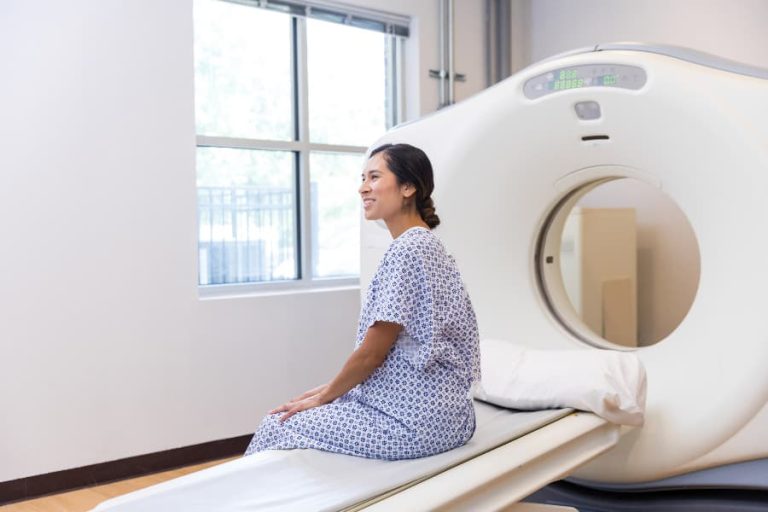
Patient in hospital gown sitting by CT scanner

Who Should Have a CT Colonography?

Colon cancer detection is the primary purpose of CT colonography. Getting a colonography, however, does not always mean that the patient is likely to have colon cancer. There are a few reasons doctors may request a colonography, including:

Routine Screening

The most common reason for CT colonography is colon cancer screening. Regular screening tests help oncologists look for polyps, tumors, and other abnormalities in the colon. Screening can detect cancer before symptoms develop, giving patients and oncologists a head start on treatment.

The American Cancer Society (ACS) recommends that individuals receive CT colonography tests every three to five years after the age of 45. Those who are at high risk of colon cancer may wish to start screening earlier or screen more frequently. Risk factors for colon cancer include:

  • Being overweight or obese
  • Being African American
  • Eating a diet high in red or processed meats
  • Eating a diet low in fruits, vegetables, and fiber
  • Consuming large amounts of alcoholic beverages
  • Having a family history of colon cancer
  • Having a history of inflammatory bowel disease (IBD)
  • Having Lynch syndrome

People with a high cancer risk may not be able to receive a CT colonography. For these individuals, colonoscopy is preferred for a better chance of identifying cancer early.

Symptom Diagnosis

CT colonography may also be requested if a patient is experiencing symptoms of a colon disorder. The imaging exam can be used to find out what is causing the symptoms. Common symptoms of colon cancer include:

  • Constipation or diarrhea that lasts longer than four weeks
  • Discolored stool or blood traces in stool
  • Frequently feeling the urge to have a bowel movement
  • Still feeling “full” after having a bowel movement
  • Frequent gas, cramps, pain, or bloating
  • Unexplained weight loss
  • Chronic fatigue or tiredness
  • Unexplained iron deficiency

Many of these symptoms are also caused by conditions other than colon cancer, such as inflammatory bowel disease (IBD) or irritable bowel syndrome (IBS). CT colonography is used to rule out potential causes and determine the correct diagnosis. Nonetheless, it is important to consult a physician about these symptoms, particularly if they are pronounced, arose suddenly, or have persisted for an extended period. Prompt evaluation will enable a doctor to address your concerns and to provide a treatment plan.

Preparing for a CT Colonography

Like other colon cancer test types, CT colonography requires a bowel cleanse. This ensures that the colon is empty and free from obstructions that might create a less clear image. Bowel cleanses typically require avoiding fibrous foods for a few days. On the day before testing, patients must shift to a clear-liquid diet that includes only liquid foods without solids or cream. Acceptable options include:

  • Fat-free broth or bouillon
  • Gelatin
  • Sports drinks
  • Plain coffee or tea
  • Pulp-free fruit juice, such as apple or white grape juice
  • Water

Patients are also provided with a strong laxative to help the bowels empty themselves. Diarrhea is common during a bowel cleanse, so patients should stay near a restroom for their comfort.

What to Expect on Testing Day

Patients are asked to wear a hospital gown for their CT colonography test. They may also be given medication to relax their bowels and reduce cramps. Anesthesia is not typically used for this procedure, which is non-invasive. The test follows these steps:

  1. The person lies down on their back, side, or stomach on a narrow table.
  2. The technologist passes a small tube into the rectum. This tube blows carbon dioxide into the colon, inflating it to ensure a clear image.
  3. The technologist goes into a control room to operate the machine. They use a built-in intercom system to communicate with the patient.
  4. The narrow table moves through a ring-shaped scanner that rotates around the patient. The patient may hear whirring, buzzing, or clicking sounds.
  5. The technologist may ask the patient to change their position at various points during the scan.

CT colonography only takes about 15 minutes. In total, the patient can expect to be at the hospital for about an hour. Patients can go home as soon as the test is complete.

After Testing

Individuals can return to their normal activities immediately after testing. They may feel bloating, gas, or cramping, which is caused by the gas used to inflate the colon. This discomfort will go away as the gas passes out of their body.

CT colonography results take a few days to a week to process. Once the results are ready, the physician will contact the individual for discussion. If the colonography results are negative, meaning that nothing suspicious was found, then no further testing is needed. If suspicious tissue or a polyp was found, however, then the patient needs to schedule additional appointments for a colonoscopy, polyp removal, or colon biopsy.

Find Colon Cancer Care Near You in NJ, CT, MA, and the Washington, D.C., Area

If CT colonography detects cancer, the next step is to plan treatment. Regional Cancer Care Associates (RCCA) provides quality cancer care with an emphasis on cutting-edge targeted therapies when possible. RCCA specialists provide care to more than 30,000 new patients and 265,000 established patients each year. RCCA physicians offer patients innovative therapies, including immunotherapies and targeted therapy, cutting-edge diagnostics as well as access to approximately 300 clinical trials in community-based centers close to home.

Frequently Asked Questions About CT Colonography

What are the benefits of CT colonography?

CT colonography is a non-invasive method of colon cancer screening. For people at average risk of colon cancer, this test lets patients receive screening with less discomfort.

Is CT colonography effective at detecting colon cancer?

CT colonography is highly effective at detecting abnormalities in the colon, though it cannot be used to examine them directly or conduct a biopsy to confirm the presence of cancer.

Who should receive CT colonography?

CT colonography is recommended for people who are at average risk of colon cancer and who do not have a history of polyps or other suspicious screenings. It is not recommended for individuals who are pregnant.

When should colon cancer screening begin?

The American Cancer Society (ACS) recommends that people at average risk of colon cancer begin routine screenings at age 45. There is no recommendation for people at above-average risk. These people should speak with their physician about the best time to start screening.

How often should I receive a CT colonography?

Patients over the age of 45 should receive a CT colonography every three to five years. If a patient is at above-average risk of colon cancer, they should speak with their physician about the best screening schedule for their needs.

Receive the Highest Standard of Care

From the moment you have you first appointment at one of RCCA’s 25+ locations, you’ll experience quality care that only our highly trained oncologists can provide. We’ll take the time to help you understand your diagnosis and your options, so you and your doctor can devise the best treatment plan for your unique situation. You’ll also have access to clinical trials, putting you at the forefront of innovations in the field of colon cancer care.

To learn more about colon cancer treatment at RCCA or to schedule an appointment, reach out to us at 844-346-7222.

RELATED ARTICLES

View All Cancer Trials

When standard cancer treatments aren’t providing the results you want, clinical trials may offer hope. Our physicians use clinical trials to study new treatments, helping transform cancer care for the better. You can enroll in a clinical trial to try groundbreaking treatment plans at zero cost to you.

Regional Cancer Care Associates is one of fewer than 200 medical practices in the country selected to participate in the Oncology Care Model (OCM); a recent Medicare initiative aimed at improving care coordination and access to and quality of care for Medicare beneficiaries undergoing chemotherapy treatment.