Key Takeaways
- Inflammatory breast cancer is a rare and aggressive form of invasive breast cancer that causes cancer cells to block lymph vessels in the skin, leading to symptoms like redness, warmth, swelling, pain, and peau d’orange (orange peel skin).
- IBC is different from other types of breast cancer because it is more aggressive, grows much faster, and is diagnosed in younger women. It also has different symptoms and generally lacks a distinct lump.
- People at a higher risk for inflammatory breast cancer include Black women, women under 40, women with obesity, and women with certain inherited genetic mutations.
- The standard treatment for IBC involves chemotherapy, surgery, and radiation therapy. Other treatments, such as targeted therapy or immunotherapy, may be used in specific cases.
What Is Inflammatory Breast Cancer?
Inflammatory breast cancer is a rare and aggressive form of invasive breast cancer. It occurs when cancer cells block lymph vessels in the skin, resulting in swelling, redness, and other signs of inflammation. Inflammatory breast cancer differs from other breast cancers in several ways:
- Speed of progression: IBC is fast-growing and aggressive, spreading more quickly than many other types of breast cancer.
- Age of diagnosis: Inflammatory breast cancer is often diagnosed at a younger age than other types of breast cancer. The average age at diagnosis is 55 to 59 for IBC, while the average age for other breast cancers is 62 to 63. IBC is also more likely to develop in women under age 40.
- Symptoms: Unlike most breast cancers that cause a noticeable lump, IBC often does not. Instead, it results in symptoms like sudden swelling, redness, and a dimpled “orange peel” texture, caused by the cancer cells spreading through the skin and blocking the lymph vessels.
When breast cancer is diagnosed, doctors assign it a stage based on its size and spread. When IBC is diagnosed, it is categorized as at least Stage III. This is because of the diffusion of cancer cells throughout the breast, which is a hallmark of IBC.
How Common Is Inflammatory Breast Cancer?
Inflammatory breast cancer is rare. According to the American Cancer Society, IBC accounts for around 1% to 5% of all breast cancer diagnoses. Although it is rare, IBC is disproportionately deadly compared to other types of breast cancer. This is because it grows rapidly and is diagnosed at Stage III or Stage IV, which means it has spread beyond its point of origin and has spread throughout the breast or to distant parts of the body.
Who Is at Increased Risk for Developing IBC?
Anyone with breast tissue can develop inflammatory breast cancer, but people in certain demographic groups are at increased risk. They include:
- Women under 40: Inflammatory breast cancer is diagnosed at a younger age than other breast cancers. The average age of diagnosis is typically between 55 and 59, although some women are under age 40 when they’re diagnosed.
- African American women: African American women have a higher incidence of IBC compared to white women, which is likely due to a combination of genetic predisposition and socioeconomic and environmental inequalities. African American women are also often diagnosed at a younger age.
- Women with obesity: Women who are overweight or obese have an increased risk of developing IBC.
Women with certain inherited genetic mutations, such as variations in the BRCA1 or BRCA2 genes, also often have an increased vulnerability to inflammatory breast cancer.
Inflammatory Breast Cancer Symptoms: What to Look For
Although inflammatory breast cancer doesn’t cause a classic lump like other forms of breast cancer, it has its own telltale symptoms that women should be aware of. They include:
- Rapid onset of breast swelling, redness, or warmth (not caused by infection)
- Skin that looks pitted or ridged, called peau d’orange (orange peel skin)
- A breast that feels heavier or fuller than usual
- A breast that looks abnormally larger than the other
- Itching, burning, or aching in the breast
- Nipple retraction (nipple turning inward) or flattening
- Swollen lymph nodes under the arm or above the collarbone
Many of these symptoms can also be caused by an infection or an inflammatory condition, such as mastitis, which can result in misdiagnosis. Mastitis usually occurs during breastfeeding and typically responds to antibiotics within 48 hours, whereas IBC will not respond to antibiotics. If you don’t see an improvement in symptoms of apparent mastitis after a week, it is essential to seek medical attention to obtain further testing. IBC spreads rapidly, so prompt evaluation is crucial.
How Is Inflammatory Breast Cancer Diagnosed?
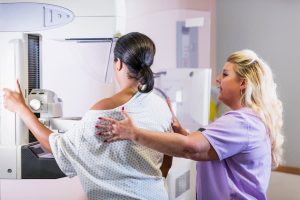
Unlike most forms of breast cancer, IBC does not typically cause a lump or mass. This means that a traditional mammogram may not detect inflammatory breast cancer. Even if it does, IBC grows rapidly and can spread throughout the breast between scheduled annual screening mammograms. Because of the ineffectiveness of mammograms for diagnosing IBC, medical professionals often use other diagnostic imaging and tools. They include:
- Ultrasound: A breast ultrasound is used to help doctors identify skin thickening, fluid buildup (edema), and swelling of nearby lymph nodes.
- Magnetic resonance imaging (MRI): An MRI is often used to visualize skin thickening that mammograms can miss. It can also help detect primary tumors, as it is a very sensitive imaging option.
- Positron emission tomography (PET)/computed tomography (CT) scan: These imaging scans are often used to determine the stage of the cancer and whether it has metastasized to other parts of the body.
- Skin punch biopsy: This involves taking a sample of the breast tissue and affected skin to look for cancerous cells and blocked lymph vessels. It is the key diagnostic test for diagnosing IBC.
When inflammatory breast cancer is diagnosed, it will be given a stage. It will always be at least Stage III at diagnosis and may be Stage IV.
Biomarker Testing
During the staging process, the oncologist will also likely request biomarker tests. This testing analyzes the tumor tissue to see if there are certain proteins or genetic mutations present, such as estrogen and progesterone receptors (ER/PR) or human epidermal growth factor receptor 2 (HER2). If the cancer shows these mutations or proteins, the patient may be eligible for certain targeted therapy treatments.
If a patient tests negative for estrogen receptors, progesterone receptors, and HER2 protein amplification, they have what is known as triple-negative breast cancer (TNBC). This aggressive subtype cannot be treated with targeted therapy, so the patient must undergo other treatments, including neoadjuvant chemotherapy, immunotherapy, and surgery.
What Are the Treatments for Inflammatory Breast Cancer?
Because inflammatory breast cancer is a fast-growing and aggressive form of cancer, it requires a multifaceted treatment approach. It typically includes three interventions: chemotherapy, surgery, and radiation. However, other treatments may be used in certain cases.
Neoadjuvant Chemotherapy
Most IBC treatment plans begin with neoadjuvant chemotherapy, or chemo before surgery. This is because is the cancer typically is inoperable at diagnosis, so the chemo must shrink the cancer before surgery is possible. Chemotherapy also works to clear cancer cells from the skin and address the hidden spread of cancer cells. It also helps oncologists see how the cancer responds to medication, helping them adjust their treatment plan as needed. A common IBC chemo regimen includes doxorubicin, cyclophosphamide, and paclitaxel (AC-T).
Surgery
Once chemotherapy is completed, the cancer cells will typically be cleared from the skin, allowing for clearer margins during surgery. The standard surgery for IBC is a modified radical mastectomy, which involves the surgical removal of the entire breast (including the skin, nipple, and areola) along with most of the lymph nodes in the underarm (the axillary lymph nodes in medical terminology). The procedure leaves the chest wall muscles intact. A lumpectomy is not appropriate for IBC because there isn’t a single, distinct lump for the surgeons to target.
Some patients want to have their breast reconstructed after a mastectomy. However, immediate reconstruction is not advised because of the subsequent radiation therapy a patient must undergo. The preferred approach is called delayed autologous tissue reconstruction, which is generally completed six months to a year after completing radiation therapy.
Radiation Therapy
After surgery for IBC, radiation therapy is recommended to eliminate any cancer cells that may remain in the chest wall or nearby lymph nodes. This helps significantly reduce the risk of recurrence and improve overall survival rates.
The type of radiation used is generally external beam radiation, which directs radiation beams from a linear accelerator to the chest wall, underarm lymph nodes, and occasionally, the collarbone and internal mammary nodes.
Targeted Therapy
Targeted therapy involves using specific drugs or lab-engineered proteins to attack certain molecular targets, such as genes or proteins, that help cancer cells survive and grow. Because they focus on specific targets, these therapies cause less damage to healthy cells than traditional chemotherapy. For patients with HER2-positive IBC, treatment includes HER2-directed monoclonal antibodies like trastuzumab and pertuzumab, or antibody-drug conjugates like trastuzumab deruxtecan. These therapies are generally given before surgery (neoadjuvant) and continued for up to a year afterward to prevent cancer growth.
Immunotherapy
Immunotherapy harnesses the power of the patient’s immune system to detect and destroy cancer cells. For patients with triple-negative IBC, immunotherapies such as pembrolizumab are often used, along with chemotherapy, to shrink tumors before surgery.
Hormonal Therapy
Hormonal therapy works by blocking or lowering the amount of hormones in the body to slow or stop the growth of hormone-sensitive cancer cells. For patients with IBC that is hormone receptor-positive (HR+), certain hormonal therapies, such as tamoxifen or aromatase inhibitors, are used. They help block the estrogen or progesterone signals that drive cancer growth. Hormone therapy is generally given after a patient has received chemotherapy, surgery, and radiation.
At RCCA, our multidisciplinary team develops personalized treatment plans to address the type and stage of a patient’s inflammatory breast cancer, drawing on the treatment options discussed above to best address each patient’s specific needs.
What Is the Outlook for People with Inflammatory Breast Cancer?
Because IBC is a rare and aggressive form of cancer that grows quickly and is more likely to spread before it is diagnosed, the survival rates for IBC are lower than those of other forms of breast cancer. According to the American Cancer Society, the five-year relative survival rate for regional IBC is 53%, and the rate for distant IBC is 22%. However, it is important to remember that these rates are just estimates for groups of patients, and the prognosis, or outlook, for each individual within that group will vary based on factors specific to that person. Those factors include the person’s age and overall health, the molecular subtype of the cancer, the cancer’s response to chemotherapy, and how closely the patient follows her treatment plan in terms of taking all medications as prescribed. Patients who are diagnosed with IBC should seek treatment at a center that has considerable experience in treating the condition. This typically results in better outcomes and lower complication rates.
Find Expert Inflammatory Breast Cancer Care Near You in NJ, CT, MA, and the Washington, D.C., Area
If you have symptoms of inflammatory breast cancer, don’t wait. See a physician for evaluation and diagnosis. Regional Cancer Care Associates offers patients newly diagnosed with any form of breast cancer fast-track appointments with our oncologists to help you obtain the care you need, whether you live in New Jersey, Connecticut, Massachusetts, or the Washington, D.C., area. To request an appointment with a cancer specialist at one of our 20 locations near you, contact us online today.
Frequently Asked Questions About Inflammatory Breast Cancer
What are the symptoms of inflammatory breast cancer?
The symptoms of inflammatory breast cancer include:
- Rapid onset of breast swelling, redness, or warmth
- Peau d’orange (orange peel skin), or breast skin which looks pitted or ridged
- Heavy or full-feeling breasts
- A breast that looks abnormally larger than the other
- Itching, burning, or aching in the breast
- Nipple retraction or flattening
- Swollen lymph nodes under the arm or above the collarbone
How is inflammatory breast cancer different from regular breast cancer?
IBC is different from other forms of breast cancer in several ways. First, it is more aggressive and grows much faster than other types. Second, it tends to be diagnosed at a younger age. Third, the symptoms differ. There typically is not a mass or lump, but rather symptoms like swelling, redness, dimpled skin (peau d’orange), and an inverted nipple.
Is inflammatory breast cancer always Stage IV?
No, inflammatory breast cancer isn’t always stage IV. However, it is always diagnosed as stage III or stage IV.
Can inflammatory breast cancer be mistaken for mastitis?
Yes, IBC is often mistaken for mastitis because they share similar symptoms. If symptoms don’t improve with antibiotics, mastitis is typically not the cause.
Who is at increased risk for inflammatory breast cancer?
Women at a higher risk for inflammatory breast cancer include Black women, women under 40, women with obesity, and those with certain inherited genetic mutations.
How is inflammatory breast cancer diagnosed?
Inflammatory breast cancer is diagnosed through a series of scans and tests, including breast ultrasounds, other imaging scans, such as magnetic resonance imaging (MRI), and a punch biopsy.
What are the treatment options for inflammatory breast cancer?
The standard treatment method for IBC involves a trimodal approach, which includes chemotherapy before surgery to shrink the tumor, surgery to remove cancerous cells, and radiation therapy to kill any remaining cells. However, other treatments, such as targeted therapy or immunotherapy, may be used in some cases.
What is the survival rate for inflammatory breast cancer?
According to the American Cancer Society, the five-year relative survival rate for regional IBC, meaning cancer which hasn’t spread beyond nearby areas, is 53%. The rate for distant IBC, or cancer that has spread to distant body parts, is 22%.