HIPAA Alert: Potential Data Breach Learn More

Search
Close this search box.

Deciding Where to Receive Cancer Care: RCCA Oncologists Outline Key 5 Considerations

“My uncle’s neighbor was diagnosed with the exact same cancer, I think, last year and his specialist has been wonderful. I’m going to get you her contact information.”

“You need to go to the city.”

“I saw this YouTube video about a clinic in Mexico that is getting amazing results from an all-natural treatment derived from avocados. I’ll send you the link.”

The news that you or a loved one has cancer typically prompts an outpouring of concern and support from relatives, friends, and co-workers. It also can bring a lot of advice regarding the care you should receive and where you should receive it. While invariably well intentioned, such recommendations can vary considerably in terms of their reliability and relevance to your particular situation.

“People newly diagnosed with cancer need to make several important decisions at a time when they are still processing the news that they have a serious disease,” says Seth H. Berk, MD, a board-certified medical oncologist and hematologist with Regional Cancer Care Associates (RCCA).  RCCA is one of the nation’s largest networks of oncology specialists, with more than 20 locations near you across New Jersey, Connecticut, Massachusetts, and the Washington, D.C., area.

“Most of those decisions – such as those related to treatment options – will be made in consultation with your oncologist, who will review the pertinent evidence, present the benefits and drawbacks of different approaches, reference the guidelines, and explain the reasons for his or her recommendations. Before any of this shared decision-making can occur, however, you need to determine who that oncologist will be and which medical practice or institution will provide your care.”

The oncologist adds, “From working with thousands of patients over more than 20 years, I know that choosing where to receive care can be a daunting task. However, looking at five key factors can provide a framework for considering your options and arriving at the decision that is best for you.”

Dr. Berk, who practices in RCCA’s Moorestown, NJ, offices, explains that those factors include:

  1. Access to the latest evidence-based, guidelines-recommended cancer therapies.
  2. Receiving care from a specialist with extensive experience treating your particular type of cancer.
  3. Forging a strong bond with your oncologist and care team.
  4. Maintaining your quality of life during treatment.
  5. Considering insurance coverage and other issues that can affect the financial impact of your cancer.

Advanced Cancer Care Is Available Close to Home

Kimberly Salwitz, MD, says that the dramatic advances in cancer care driven by the development of new drugs has been accompanied by a less noted but equally important trend. “Beyond having more-effective therapies, we are able to offer those treatments to more people than ever before thanks to the medications’ availability in community-based practices close to people’s homes.”

A board-certified medical oncologist and hematologist practicing at RCCA’s Little Silver, NJ, office, Dr. Salwitz says, “We are many years past the point where a person had to travel to a major city to have access to a newly approved therapy or, for that matter, an investigational treatment being evaluated in a clinical trial. Community-based centers such as ours offer the latest in targeted therapy, immunotherapy, and other cutting-edge treatments, as well as next-generation diagnostics and the opportunity to participate in clinical trials.”

The oncologist adds that the widespread use of evidence-based guidelines from organizations such as the National Comprehensive Cancer Network ensures that specialists in various regions and practice settings take a data-driven approach to care while individualizing their treatment strategies to a patient’s specific needs. “Expert panels update these guidelines throughout the course of the year as new research is published, so that all oncologists are able to provide care that reflects the latest evidence,” Dr. Salwitz notes.

In terms of the second factor, Dr. Berk recommends that people ask an oncologist how much experience he or she has treating their particular type of cancer. He adds, “While it is an important question to ask, unless you have been diagnosed with a rare or very uncommon form of cancer, most oncologists are likely to have considerable experience with your condition. Cancer specialists complete an oncology and hematology fellowship, typically lasting three years, at a major medical center, and manage a wide range of solid tumors and cancers of the blood and blood-forming tissues during that time. Upon entering practice, you gain even more broad-based experience, particularly if you are in a community setting where you are treating people with a wide variety of diagnoses.”

Dr. Berk continues, “As a physician who cares for people with potentially life-threatening diseases, I want all patients to have the best possible opportunity to achieve the best possible outcome. In the great majority of cases, I am confident that I can provide them with the care that offers that opportunity. However, in any instance where I think a patient would be better served elsewhere – for example, because she has a very uncommon cancer that I have not treated extensively – I do not hesitate to refer the patient to the physician or institution where I believe she will be best served. In my experience, that is the norm among oncologists, as it should be.”

Nurse talks with patient with cancer
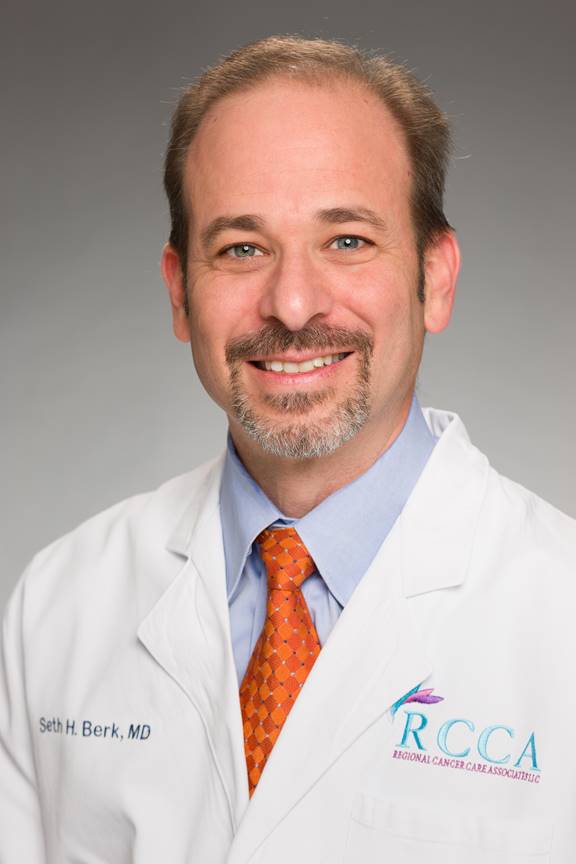
Portrait of Seth H. Berk, MD
“One major advantage of community-based cancer care is that it enables people to receive treatment at a center located 10 or 20 minutes from their homes, as opposed to having to travel a longer distance and deal with big-city traffic and big-institution parking hassles.” Seth H. Berk, MD
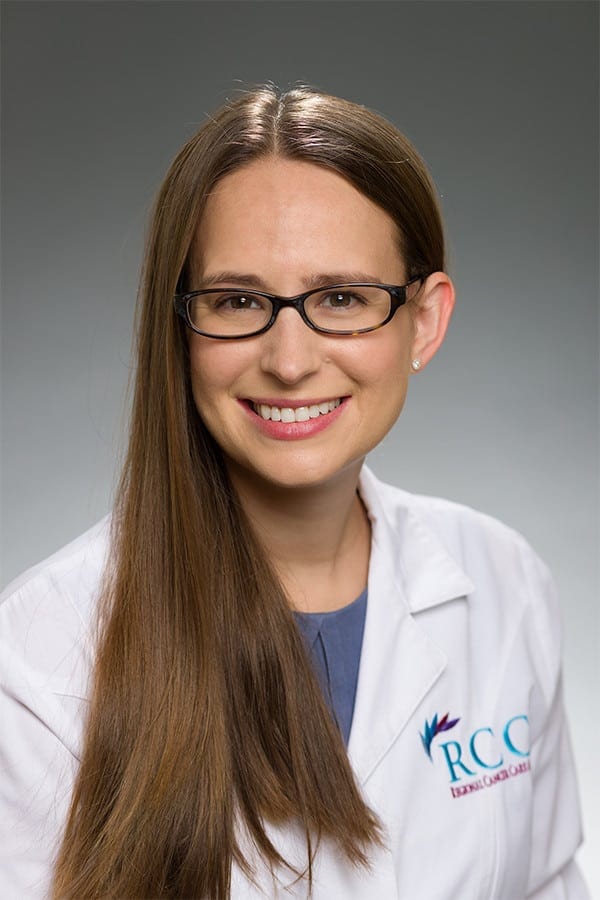
Portrait of Kimberly Salwitz, MD
“Community-based centers such as ours offer the latest in targeted therapy, immunotherapy, and other cutting-edge treatments, as well as next-generation diagnostics and the opportunity to participate in clinical trials.”

 - Kimberly Salwitz, MD

The Advantages of Choosing a Community-Based Cancer Center

Dr. Salwitz adds that another important consideration in deciding where to receive care is your sense of whether you will be able to forge a strong bond with your oncologist and others who will be involved with your treatment. “You want to be able to know – and to be known by – everyone on the care team. That starts with your physician, of course, but it also includes nurses and nurse practitioners, and even the tech who draws your blood, the office staffer who assists you with insurance questions, and the receptionist who greets you when you walk through the door.” She adds, “All people deserve to be recognized and treated as individuals, not as numbers, and that is particularly true of people facing cancer. In my view, that is one of the great advantages of receiving treatment at a community-based center. There are caring clinicians and staff members in all practice settings, but there is so much to be said for receiving treatment in a place where you are seeing the same people visit after visit and can really forge close relationships with them.”

Quality of life is another area where community-based centers can have an advantage, Dr. Berk adds. “One major plus is being able to receive treatment at a center located 10 or 20 minutes from your home, as opposed to having to travel a longer distance and deal with big-city traffic and big-institution parking hassles. While we have made great progress in managing the side effects of chemotherapy, radiation, and other therapies, receiving cancer treatment still can be draining physically and emotionally, and the ability to get back home without delay or stress can count for a lot,” the oncologist says.

H2: Why a Comprehensive Approach to Cancer Care Is Important

Dr. Berk, who serves as RCCA’s Board Chairperson, continues that the benefits of receiving care locally extend to efficient collaboration between a patient’s oncologist and other physicians. “Most people with cancer have at least one other significant health condition, such as high blood pressure, diabetes, or asthma. The medications used to treat your cancer can have an impact on those conditions or interact with the drugs you are taking to control them. As a result, it is imperative that your physicians communicate and coordinate with one another. When you are being treated for cancer in your own community, your oncologist often will be on staff at the same hospital as your cardiologist, endocrinologist, or primary care physician, or know them because they have other shared patients. These established relationships really facilitate coming together as a team to provide ‘whole-person’ care,” he explains.

Lastly, Dr. Salwitz notes that ensuring that your physician and cancer care center participate in your insurance plan and can help you navigate the complexities of coverage is essential. “When you’re facing cancer, you should be able to focus your time and energy on getting better, not on paperwork. That’s why RCCA participates in a broad range of insurance plans and has administrative staff and financial counselors to handle prior authorizations, advise you about available co-pay assistance and patient-support programs, and generally assist you with understanding insurers’ policies,” the cancer specialist says.

Dr. Salwitz adds, “The decision about where to receive cancer care is a highly personal one. For all the good intentions and strong opinions of family and friends, the right place for you to receive treatment is the place where you feel most confident in the care team and most comfortable with the center’s environment and commitment to meeting your unique needs and preferences. Regardless of where you choose to receive care, all of us at RCCA wish you abundant hope, deep peace, and good health.”

H2: Find Outstanding Cancer Care Near You in New Jersey, Connecticut, Massachusetts, and the Washington, D.C., Area

Dr. Berk and Dr. Salwitz are among 90+ medical oncologists and hematologists who practice with Regional Cancer Care Associates (RCCA), one of the nation’s largest networks of oncology specialists. RCCA has more than 20 locations near you across New Jersey, Connecticut, Massachusetts, and the Washington, D.C., area. RCCA’s cancer specialists see more than 30,000 new patients each year and provide care to more than 265,000 established patients, collaborating closely with those patients’ other physicians. RCCA physicians offer patients innovative therapies, including immunotherapies and targeted therapy, as well as access to approximately 300 clinical trials. In addition to serving patients who have solid tumors, blood-based cancers, and benign blood disorders, RCCA care centers also provide infusion services to people with a number of non-oncologic conditions—including multiple sclerosisCrohn’s diseaseasthma, iron-deficiency anemia, and rheumatoid arthritis—who take intravenously-administered medications.

To learn more about RCCA, call 844-346-7222 or contact RCCA.

we are here for you

For more information or to schedule an appointment,
call 844-346-7222. You can also schedule an appointment by calling the RCCA location nearest you.

RELATED ARTICLES

Regional Cancer Care Associates is one of fewer than 200 medical practices in the country selected to participate in the Oncology Care Model (OCM); a recent Medicare initiative aimed at improving care coordination and access to and quality of care for Medicare beneficiaries undergoing chemotherapy treatment.