HIPAA Alert: Potential Data Breach Learn More

Search
Close this search box.

Cutting Your Cancer Risk: RCCA Oncologists Discuss 4 Lesser-Known Steps

You don’t smoke. You drink alcohol in moderation, if at all. You avoid processed meats and you dab on the sunscreen before you hit the beach. You’re on schedule in terms of screenings such as colonoscopy and mammography.

Congratulations! You are taking several important steps to protect yourself from cancer, ones that have been shown to make a real difference. That’s great news – and the news gets even better. Two board-certified medical oncologists with Regional Cancer Care Associates (RCCA) – one of the nation’s largest networks of oncology specialists, with more than 20 locations near you across New Jersey, Connecticut, Massachusetts, and the Washington, D.C., area – explain that in addition to keeping up the good work you’re already doing, you can reduce your risk of developing cancer even further by taking the four lesser-known steps outlined below.

Additional Steps for Reducing Cancer Risk

  1. Test your home for radon. “Most people know that smoking is – by far – the leading cause of lung cancer in the United States but relatively few realize that exposure to radon – an odorless, colorless, radioactive gas – is the second leading cause, contributing to about 21,000 deaths from lung cancer across the country each year,”1 says Rachel Levenbach, MD.

    Dr. Levenbach, who practices at RCCA’s Moorestown, NJ, offices, explains, “Radon forms from the decay of radioactive elements found in soil and rock and then can enter homes and other buildings – particularly basements – as well as drinking water.1 Unfortunately, a uranium-rich geological formation known as the Reading Prong runs through parts of Pennsylvania, New Jersey, and New York State,2 with uranium decay from this subterranean formation leading to high radon levels in many area homes.”

    People who breathe radon-laden air over long periods can accumulate tiny radioactive particles in the lining of their lungs. The radiation emitted by those particles can cause cellular damage that eventually leads to lung cancer.1

    The medical oncologist notes that people can check the radon levels in their homes either by purchasing a test kit that they send to a laboratory for analysis or by hiring an engineer or other professional to conduct measurements. If high levels of the gas are detected, remedial steps include sealing any cracks in the foundation or basement floor and enhancing ventilation through the use of pipes and fans.

    “Radon is among the leading causes of lung cancer death in people who don’t smoke,1 so it is important to know whether you are facing an unseen risk in your home,” Dr. Levenbach notes.

  2. Consider having a total body skin examination. Victor Aviles, MD, a medical oncologist practicing at RCCA’s North Falmouth, MA, offices, notes that medical organizations and government health agencies have differing views on whether, when, and how often a person should have a physician perform a total body skin exam to look for precancerous or cancerous moles.

    Dr. Aviles says, “There is widespread consensus that people should check their skin on a regular basis and should see a physician promptly if a mole meets any of the ABCDE criteria for potential melanoma. [See sidebar, “Guarding against melanoma, one letter at a time.”] However, there are honest differences of opinion on the best approach to having physicians screen for skin cancer. The United States Preventive Services Task Force, a panel of experts that advises the government, says that there is not sufficient evidence to make a recommendation on the subject.3 By contrast, the non-profit Skin Cancer Foundation recommends that people at increased risk for skin cancer have a physician perform an annual exam.4 Other organizations also support regular exams for people at high risk by virtue of having had blistering sunburns in childhood, prior skin cancers, or a family history of melanoma.”

    The cancer specialist adds, “As an oncologist who practices near the beaches of Cape Cod and who has treated numerous cases of melanoma, I favor erring on the side of caution. I think it makes sense to augment regular self-exams with periodic assessment by a dermatologist or your primary care provider. Melanomas typically develop over the course of many years, providing time to deal with a mole while it is still precancerous or in its earliest stages of malignancy. Sadly, however, the American Cancer Society estimates that more than 8,500 people in the United States will die due to melanoma in 2026.”5

    Dr. Aviles continues, “Reducing your risk of skin cancer also entails wearing protective clothing and applying effective sunscreen when you’re in the sun and absolutely avoiding tanning beds. Further, I want people to understand that while individuals with lighter skin are at increased risk for skin cancer, melanoma can affect anyone, including Black people and others with darker skin, so if you see a mole that is changing in size or appearance or that concerns you in any other way, see your physician without delay.”

  3. Grill safely. Hosting a backyard barbecue is quintessential summer socializing, but high-temperature grilling may heighten risk for three cancers.6

    Dr. Levenbach explains that cooking meat at high temperatures can lead to production of two cancer-causing substances – polycyclic aromatic hydrocarbons (PAHs) and heterocyclic amines (HCAs). PAHs in flames can stick to the surface of meat, while HCAs are created when the protein in meat reacts to the high temperatures used for grilling or charbroiling.

    “Two separate sets of evidence drive the concern about cancer risk with grilling,” Dr. Levenbach says. “First, several epidemiological studies have found an association between high consumption of barbecued, fried, and well-done meats and elevated risk for people developing colorectal cancer, pancreatic cancer, and prostate cancer.6 Second, laboratory studies have shown that PAHs and HCAs cause cancer in animals. However, it is important to note that not all of the epidemiological studies examining this issue have found an increased cancer risk and that the animal-model studies involved very high doses of PAHs and HCAs – equivalent to doses much, much greater than a person would consume. As a result, we don’t have direct, definitive proof of a link between grilling and cancer, but there are several steps people can take to reduce exposure to cooking-generated PAHs and HCAs.”

    The medical oncologist explains that those steps include marinating meat before grilling it, as studies suggest that this reduces HCA formation; pre-cooking larger cuts of meat in the oven, stove, or microwave to reduce time on the grill; cutting meat into smaller portions; which also can reduce the time needed for grilling; and trimming the fat off meat before grilling, which will reduce charring.7

    “Perhaps the best way to reduce any cancer risk related to grilling is to switch out the meat for a healthier alternative. Grilled vegetables and fruits don’t produce HCAs when they are cooked.7 Besides, they taste great and are key components of a healthy diet,” Dr. Levenbach says.

  4. Move more. It might seem strange to include physical activity on a list of “lesser-known” ways to protect one’s health, but Dr. Aviles says that the characterization is appropriate when it comes to cancer prevention.

    “The benefits that exercise offers in terms of cardiovascular health, weight reduction, and even emotional well-being are widely recognized, but I find that many people don’t appreciate the profound effect that physical activity can have on reducing cancer risk,” the medical oncologist says.

    Dr. Aviles adds, “Numerous studies have shown that regular physical activity is associated with double-digit reductions in the risk of developing several types of cancer, including those of the bladder, breast, colon, esophagus, kidneys, stomach, and uterus.8 Further, under the guidance of a healthcare professional, appropriate exercise is associated with increased survival in people who have been diagnosed with cancer and with easing the fatigue associated with cancer and its treatment.”8

    The physician adds that researchers have identified several mechanisms driving the protective effects of physical activity, including reducing inflammation, enhancing the immune system, lowering levels of hormones implicated in the development of cancer, and preventing obesity, which is a major risk factor for the disease.

    Dr. Aviles explains that U.S. Department of Health and Human Services recommendations for reducing the risk of cancer and other chronic disease call for adults to engage in:
  • 150-300 minutes of moderate-intensity aerobic activity, or 75-100 minutes of vigorous aerobic activity, or an equivalent of the two each week.
  • muscle-strengthening activities at least two days a week
  • balance training


“Check with your physician before launching into any new exercise regimen, and pace yourself when you’re starting out, but I hope that knowing you are reducing your chances of developing cancer will provide that much more motivation to string up your sneakers and get on the treadmill, sidewalk, pickleball court, or wherever else you like to move,” Dr. Aviles says.

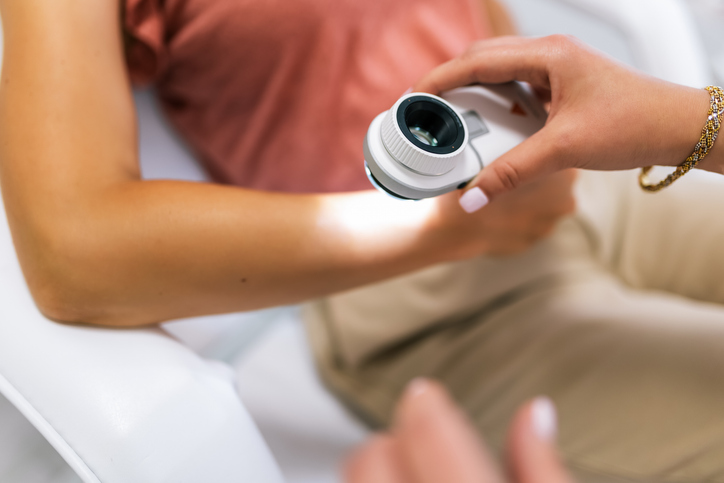
Dermatologist examines patient’s mole
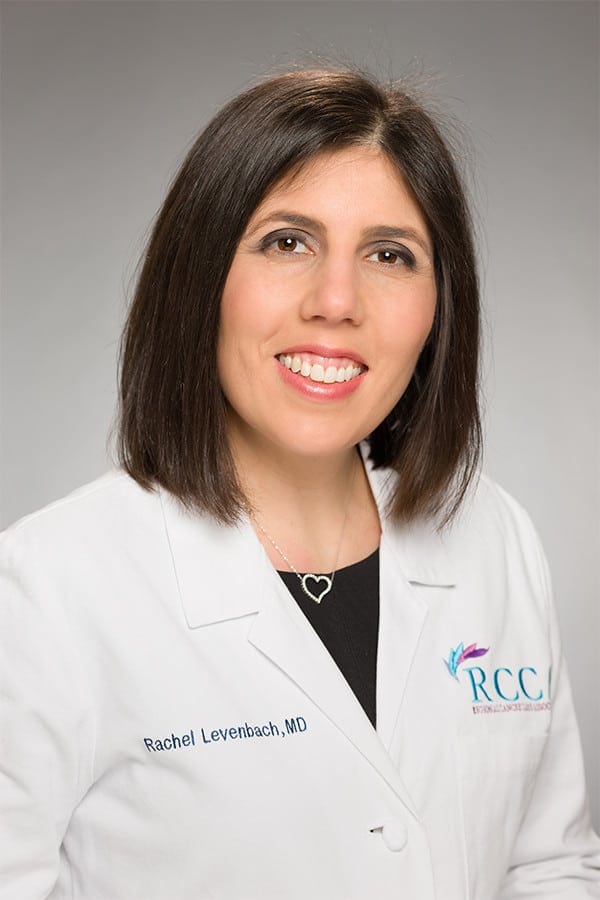
Portrait of Rachel Levenbach, MD
“Radon is among the leading causes of lung cancer death in people who don’t smoke, so it is important to know whether you are facing an unseen risk in your home.”
- Rachel Levenbach, MD
Portrait of Victor Aviles MD
“Numerous studies have shown that regular physical activity is associated with double-digit reductions in the risk of developing several cancers, including those of the bladder, breast, colon, esophagus, kidneys, stomach, and uterus.”
- Victor Aviles, MD

Find Expert Cancer Care Near You in New Jersey, Connecticut, Massachusetts, and the Washington, D.C., Area

Dr. Aviles and Dr. Levenbach are among 100+ medical oncologists and hematologists who practice with Regional Cancer Care Associates (RCCA), one of the nation’s largest networks of oncology specialists. RCCA has more than 20 locations near you across New Jersey, Connecticut, Massachusetts, and the Washington, D.C., area. RCCA’s cancer specialists see more than 30,000 new patients each year and provide care to more than 265,000 established patients, collaborating closely with those patients’ other physicians. RCCA physicians offer patients innovative therapies, including immunotherapies and targeted therapy, as well as access to approximately 300 clinical trials. In addition to serving patients who have solid tumors, blood-based cancers, and benign blood disorders, RCCA care centers also provide infusion services to people with a number of non-oncologic conditions—including multiple sclerosisCrohn’s diseaseasthma, iron-deficiency anemia, and rheumatoid arthritis—who take intravenously-administered medications.

To learn more about RCCA, call 844-346-7222 or contact RCCA.

References

  1. American Cancer Society. Radon and Cancer Risk. Available at https://www.cancer.org/cancer/risk-prevention/radiation-exposure/radon.html. Accessed March 4, 2026.
  2. State of New Jersey. Department of Environmental Protection. Radon Protection Element. Available at https://www.nj.gov/dep/rpp/radon/radoinfo.htm. Accessed March 2, 2026.
  3. United States Preventive Services Task Force. Final Recommendation Statement. Skin Cancer: Screening. April 18, 2023. Available at https://www.uspreventiveservicestaskforce.org/uspstf/recommendation/skin-cancer-screening. Accessed March 4, 2026.
  4. Skin Cancer Foundation. Annual exams: five easy steps to prepare yourself. Available at https://www.skincancer.org/early-detection/annual-exams/. Accessed March 3, 2026.
  5. American Cancer Society. Cancer Facts & Figures 2026.
  6. National Cancer Institute. Chemicals in Meat Cooked at High Temperatures and Cancer Risk. Available at https://www.cancer.gov/about-cancer/causes-prevention/risk/diet/cooked-meats-fact-sheet#. Accessed March 6, 2026.
  7. American Institute for Cancer Research. Five steps for cancer-safe grilling. Available at https://www.aicr.org/news/five-steps-for-cancer-safe-grilling/. Accessed March 3, 2026.
  8. National Cancer Institute. Physical Activity and Cancer. Available at https://www.cancer.gov/about-cancer/causes-prevention/risk/obesity/physical-activity-fact-sheet. Accessed March 4, 2026.

Guarding against melanoma, one letter at a time

The American Academy of Dermatology recommends that people assess any moles on their body for the following five indicators of potential melanoma, and that they seek medical attention promptly if they notice one or more of the concerning features:

  • A – Asymmetry: One half of the mole is unlike the other half.
  • B – Border: The spot has an irregular, scalloped, or poorly defined border.
  • C – Color: The spot includes varying colors, such as tan, brown, or black, or areas of white, red, or blue.
  • D – Diameter: The mole is larger than the size of a pencil eraser (although melanomas also can be smaller)
  • E – Evolving: The mole is changing in size, shape, or color.

    Reference:

    American Academy of Dermatology. What to Look for: ABCDEs of Melanoma. Available at https://www.aad.org/public/diseases/skin-cancer/find/at-risk/abcdes. Accessed March 3, 2026.

we are here for you

For more information or to schedule an appointment,
call 844-346-7222. You can also schedule an appointment by calling the RCCA location nearest you.

RELATED ARTICLES

Regional Cancer Care Associates is one of fewer than 200 medical practices in the country selected to participate in the Oncology Care Model (OCM); a recent Medicare initiative aimed at improving care coordination and access to and quality of care for Medicare beneficiaries undergoing chemotherapy treatment.