Communication and Collaboration Throughout the Course of Cancer Care
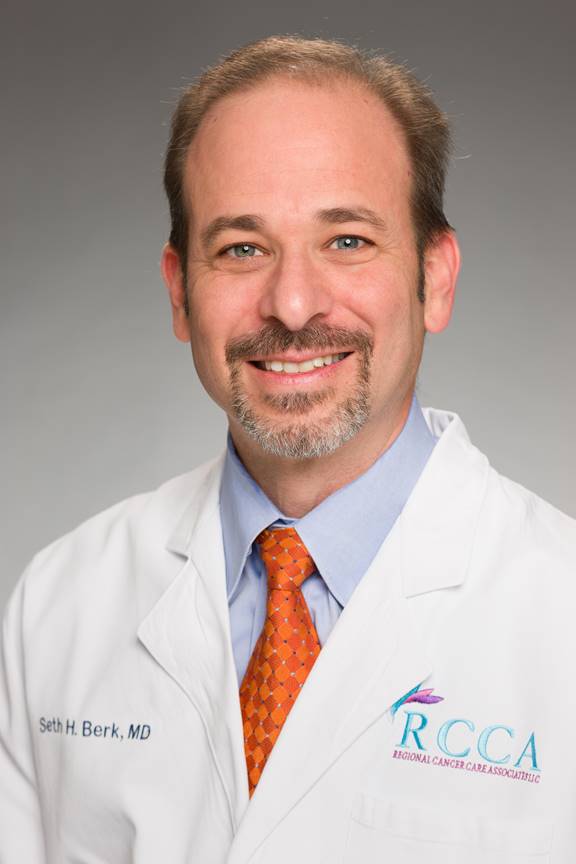
The key to RCCA’s approach, Dr. Berk adds, is to stay in touch with the patient’s other physicians throughout the course of cancer care and, as appropriate, during long-term follow-up.
The oncologist/hematologist, who practices at RCCA’s Moorestown, NJ offices, says that effective collaboration means communicating at several points, including:
- When a non-oncology clinician has concerns or questions about potential cancer.
- At referral for suspected or confirmed cancer. In the case of a suspected malignancy, this includes follow-up when testing confirms or rules out cancer.
- Upon formulating the initial cancer treatment plan.
- When there are significant changes to the treatment plan due to disease progression, treatment-related adverse effects, or similar developments.
- When blood work, imaging studies, or other assessments suggest the presence of a new (or worsening) non-oncologic condition.
- Upon relapse and re-initiation of therapy following successful initial treatment.
- When a patient who has completed treatment is at risk for long-term sequelae of therapy, such as cardiotoxicities.
Dr. Berk says, “I think that one of the great strengths of RCCA is that our offices and oncologists are based in the community. For patients, this means access to the latest therapies and clinical trials in a convenient setting close to their homes. For those patients’ other physicians, however, it means ready access to colleagues who they often know from the hospital staff or local medical society, and who frequently are on the same EMR platform. Dozens of area PCPs and other physicians on the front lines of cancer detection have my cell phone number, and I’m always available for a quick consult, to expedite a patient’s first visit, or to coordinate our response to a treatment-related concern. Putting the patient at the center of care means working closely with the other clinicians in that patient’s orbit, and that is a priority for all of us at RCCA.”
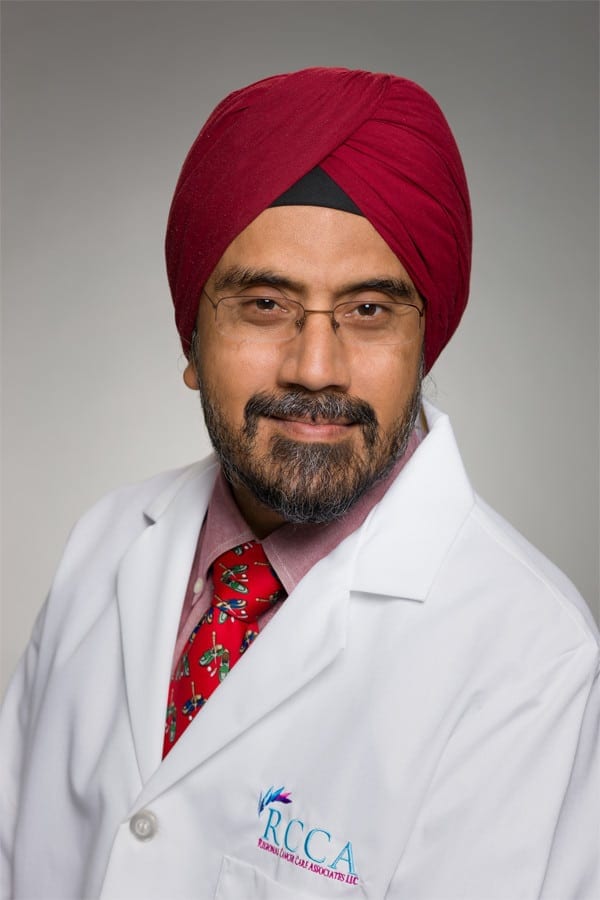
Dr. Kapoor adds, “Thanks to the advances that have transformed cancer care in recent years, we have more therapies available to us than ever before, and those therapies are enhancing outcomes and extending survival to a greater degree than ever before. These are wonderful developments, but they add complexity to the treatment decisions that oncologists and other physicians need to make to optimize patients’ health both during and following cancer treatment. We’re committed to communicating and closely collaborating with our patients’ other physicians to protect and promote those patients’ overall well-being.”
Find Expert Cancer Care Near You in New Jersey, Connecticut, Massachusetts, and the Washington, D.C., Area
Dr. Berk and Dr. Kapoor are among 90+ medical oncologists and hematologists who practice with Regional Cancer Care Associates (RCCA), one of the nation’s largest networks of oncology specialists. RCCA has more than 20 locations near you across New Jersey, Connecticut, Massachusetts, and the Washington, D.C., area. RCCA’s cancer specialists see more than 30,000 new patients each year and provide care to more than 265,000 established patients, collaborating closely with those patients’ other physicians. RCCA physicians offer patients innovative therapies, including immunotherapies and targeted therapy, as well as access to approximately 300 clinical trials. In addition to serving patients who have solid tumors, blood-based cancers, and benign blood disorders, RCCA care centers also provide infusion services to people with a number of non-oncologic conditions—including multiple sclerosis, Crohn’s disease, asthma, iron-deficiency anemia, and rheumatoid arthritis—who take intravenously-administered medications.
To learn more, call 844-346-7222 or contact RCCA.
References
- Kim SE, Rubalcava C, Tsui J. Abstract 4017. The prevalence of comorbid chronic conditions among cancer patients in the All of Us Research Program. Cancer Res. 2025;85(8_Supplement_1): 4017.
- Dean T, Kone A, Martin L, Armstrong J, Sirois C. Understanding the extent of polypharmacy and its association with health service utilization among persons with cancer and multimorbidity: a population-based retrospective cohort study in Ontario, Canada. J Pharm Pract. 2024;37(1):35-46.