Advances in Hematology-Oncology Adoptive Cell Therapy
Research is ongoing to develop innovative treatments for cancers and blood disorders. Treating these diseases can be challenging, as they manifest differently in each patient,
HIPAA Alert: Potential Data Breach Learn More
Questions on Oncology, Hematology and/or Infusion Clinical Services due to COVID-19 Crisis – CALL 833-698-1623
Important Information for Our Patients Regarding the Coronavirus.
RCCA Providing Area Cancer Patients with Access to Care During Coronavirus Outbreak
RCCA Offering Patients Virtual Visits During Coronavirus Pandemic
Uterine cancer is among the most common cancers affecting women in the United States. Fortunately, if it is caught early, it is also one of the most treatable. This is why it remains important for patients to educate themselves. By understanding the signs, stages, and treatment options, patients can make informed decisions about when to seek care.
Many individuals diagnosed with a uterine cancer turn to Regional Cancer Care Associates (RCCA) for treatment. RCCA, is a group of more than 90 medical oncologists and hematologists who treat patients who have solid tumors, blood-based cancers and benign blood disorders at more than 20 locations throughout New Jersey, Connecticut, Massachusetts, and the Washington, DC area. At RCCA, patients are able to receive comprehensive cancer care close to home.
Uterine cancer is a type of cancer that develops in the uterus. Cancer begins when a handful of cells develop a mutation that prompts uncontrollable growth. The cells divide and reproduce rapidly, creating a lump of abnormal tissue called a tumor. The tumor eventually grows large enough to crowd out healthy tissue or spreads to create new growths in distant parts of the body.
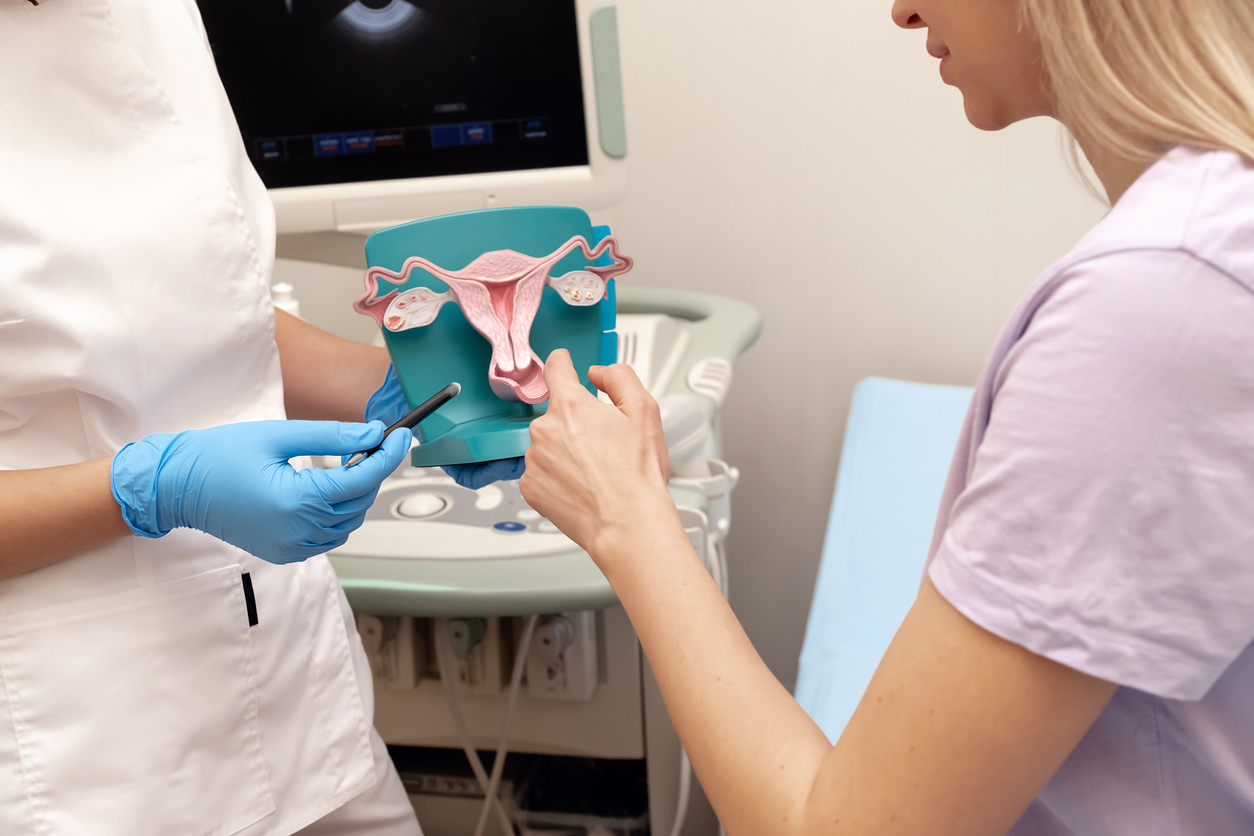
The uterus is a female reproductive organ located in the pelvis between the bladder and the rectum. It plays an important role in pregnancy. When an egg released by the ovaries is fertilized by sperm, the egg implants in the nutrient-rich uterine lining (endometrium) and develops into a fetus. Every month during a woman’s reproductive years (after puberty and before menopause), if pregnancy does not occur, then the uterus sheds the endometrium and causes a menstrual period.
Uterine cancer is a relatively common type of cancer. About 68,270 new cases are diagnosed every year, accounting for 3.2% of all new cancer diagnoses. Most of these patients will have a good outcome. The overall five-year survival rate for uterine cancer is 81%, and the rates are even better for cancer that is caught during the early stages.
There are two main types of uterine cancer, categorized based on the tissue in which they form. The different types of uterine cancer have their own signs, behaviors, and appropriate treatments. Understanding each is essential to ensure early diagnosis and the best outcomes from care. Learn more about the types of uterine cancer:
Endometrial cancer originates in the tissues of the endometrium, or the uterine lining. The first sign of this type of cancer is often excessive or irregular bleeding. Endometrial cancer is the most common type of uterine cancer, accounting for more than 90% of cases of uterine cancer.
Uterine sarcoma develops in the myometrium, or the muscle wall of the uterus. It is an aggressive cancer type that usually grows and spreads more quickly than endometrial cancer. Fortunately, it is also rare, accounting for less than 4% of all uterine cancers in the United States.
Like most types of cancer, uterine cancer does not always cause symptoms right away. Symptoms of uterine cancer develop gradually and may include:
Abnormal bleeding is the most common sign of uterine cancer. The bleeding may be heavier than usual, or it may occur at irregular times, such as between periods or after menopause. Bleeding after periods stop is never normal. Patients who bleed after menopause should always consult a physician.
Uterine cancer may also cause vaginal discharge that is not blood. The discharge may be unusually thin or watery, and it is usually pink, brown, or streaked with blood. The discharge may also have a strong or foul odor. Once again, women should always talk to a doctor about abnormal discharge.
Pelvic discomfort is a common symptom of later-stage uterine cancer. The person may feel pain, pressure, or a feeling of fullness in the pelvis. This symptom occurs as the tumor grows large enough to press against nearby tissue, reducing free space in the pelvis.
Pelvic discomfort is often accompanied by new urinary problems. The growing tumor presses against the nearby bladder or urethra, interfering with its function. Patients may experience frequent or urgent urination, difficulty starting urination, or burning pain when urinating.
Late-stage uterine cancer may also cause pain during sexual intercourse. A large tumor reduces space in the pelvis and may also cause inflammation. As a result, pressure may cause sharp or dull pelvic pain. Patients who experience new pain during sex should contact a doctor right away.
Finally, like other types of cancer, uterine cancer often causes unexplained weight loss. This symptom occurs as the cancer hijacks the metabolism to fuel its own rapid growth. The cancer consumes calories that the body needs, leading to sudden weight loss and fatigue.
As always, it is important to note that many individuals who experience one or more of the listed symptoms will not have uterine cancer. Nonetheless, it is important to consult a physician about these symptoms, particularly if they are pronounced, arose suddenly, or have persisted for an extended period. Prompt evaluation will enable a doctor to address your concerns and to provide a treatment plan for whatever condition may be responsible for the symptoms.
Any woman can develop uterine cancer, but certain health and lifestyle factors can make cancer more likely. By understanding their risk factors, women can be more proactive about monitoring their health and seeking care when appropriate. Risk factors for uterine cancer include:
Women with a higher-than-average risk of uterine cancer should pay special attention to their reproductive health. If they notice any sudden changes, they should speak with their physician about diagnostic testing to determine the cause. The earlier uterine cancer is detected, the more successful treatment is likely to be.
Most uterine cancer cases are detected because the patient noticed something wrong. When patients seek medical attention for abnormal vaginal bleeding, discharge, or pain, their physician will perform several tests to determine the cause. Here is a summary of a typical diagnostic process:
A pelvic exam is a type of physical examination that is focused on the pelvis. The physician firmly palpates the pelvis to feel for abnormal lumps that might indicate a tumor. The pelvic exam may include a Pap test or smear. The physician uses a specialized brush or spatula to collect cells from the cervix lining. The collected sample will be tested in a laboratory to look for cancer cells.
A transvaginal ultrasound is a medical imaging test to look for uterine cancer. The physician inserts an ultrasound probe into the vaginal opening. The probe generates sound waves that are reflected off internal structures. The reflections are used to generate images of the inside of the uterus, which the physician can examine for a tumor, a thickened endometrium, or other tissue abnormalities.
If cancer is strongly suspected, then the physician will recommend an endometrial biopsy. A thin, flexible tube is inserted into the vagina and guided into the uterus through the cervix. Using suction, a small piece of endometrium is removed through the tube. The endometrium sample is examined under a microscope to check for cancer cells.
A hysteroscopy is another method to visualize the uterine lining and collect samples. The uterus is inflated with a saline solution (salt water). Then, a hysteroscope is inserted into the vagina and through the cervix. The hysteroscope is a thin, flexible tube with a camera and a cutting tool. It lets the physician examine the endometrium and collect biopsy samples from any unusual growths.
If cancer cells are found with an endometrial biopsy, then the physician will request a staging workup. This phase uses multiple medical imaging tests, including a chest X-ray, a computed tomography (CT) scan, and a magnetic resonance imaging (MRI) scan, to look for growths elsewhere in the body. The results help the physician determine the cancer stage, or how far it has spread outside the uterus.
Uterine cancer is staged based on the TNM system. The system describes the cancer’s progression based on the size of the tumor (T), the cancer’s spread to nearby lymph nodes (N), and its metastasis to distant sites (M). These factors are used to assign the cancer a stage and determine the best treatment approach. The stages are summarized as follows:
In Stage I, the tumor is growing only inside the uterus. The cancer may have grown partway through the uterus wall, but it has not spread to nearby lymph nodes or to distant parts of the body. The five-year survival rate is as high as 96%.
In Stage II, the cancer has spread from the uterus into the cervical stroma, or the connective tissue that supports the cervix. It has not spread to nearby lymph nodes or to distant parts of the body. The five-year survival rate is about 72%.
In Stage III, the cancer has spread to the vagina, fallopian tube, ovaries, pelvic lining, or nearby lymph nodes. It has not spread to the rectum, the bladder, or more distant parts of the body. The five-year survival rate is about 72%.
In Stage IV, the cancer has spread to the inner lining of the rectum, the bladder, or to distant lymph nodes or other parts of the body. Stage IV cancer is also called metastatic cancer, and its five-year survival rate is 22%.
No two cases of uterine cancer are identical, and neither are uterine cancer treatments. Every patient’s treatment plan is personalized based on the type of cancer they have, its stage, its molecular traits, and their goals. RCCA oncologists work with patients to select between the following options:
Surgery is typically the first-line treatment for uterine cancer. The goal of surgery is to completely remove the cancer so that it cannot continue to spread. Procedure types include:
The standard procedure for uterine cancer is a total hysterectomy, which removes the uterus and cervix. The ovaries and fallopian tubes may also be removed if there is a possibility that the cancer has spread. A hysterectomy may be performed as a minimally invasive procedure or as a traditional (open) surgery.
During a hysterectomy, the surgeon may also perform a lymph node dissection. The surgeon removes one of the lymph nodes closest to the uterus to check for cancer cells. If the biopsy reveals malignant cells, it is an indication that the cancer may have spread to other lymph nodes.
Radiation therapy is sometimes used after surgery to kill any cancer cells that the surgeon might have missed. Radiation therapy targets cancer cells with a focused beam of energy that destroys their DNA, stopping the cells from dividing. Stereotactic radiosurgery divides the radiation between nearly 200 beams, delivering a high dosage directly to the tumor while reducing exposure to healthy tissue.
Chemotherapy uses strong drugs that circulate through the bloodstream and kill fast-dividing cells, especially cancer cells. It is typically recommended as an adjuvant treatment, meaning that it is often used alongside surgery. It may be used to shrink the tumor before a hysterectomy, kill cells that were left behind afterward, or stop the spread of late-stage uterine cancer.
Hormone therapy is another common option. Certain types of uterine cancer use hormones, such as estrogen or progesterone, to fuel their growth. Hormone therapy blocks these hormones to starve the cancer. It is often recommended for early-stage cancer when the patient wants to avoid surgery. It may also be used alongside chemotherapy to control advanced or recurring uterine cancer.
Targeted therapy is a cutting-edge innovation in uterine cancer care. These drugs attack cells with specific molecular characteristics or behaviors, blocking the proteins that signal cancer growth. Targeted therapy drugs are named after the genes they target, such as:
Targeted therapy is often used alone or in combination with chemotherapy as a way to control late-stage (metastatic) uterine cancer.
Immunotherapy is a recent innovation related to targeted therapy. This treatment works by giving the patient’s immune system the tools it needs to fight cancer. The main immunotherapy drugs for uterine cancer are checkpoint inhibitors, which block the proteins that cancer cells use to hide from the immune system. Immunotherapy is often used alongside chemotherapy to control high-risk cancers.
A uterine cancer diagnosis may be intimidating, but it is not always life-threatening. With state-of-the-art care, patients with uterine cancer can achieve full remission for early-stage uterine cancer or a longer survival for metastatic cancer.
Regional Cancer Care Associates (RCCA) specialists provide care to more than 30,000 new patients and 265,000 established patients each year. RCCA physicians offer patients innovative therapies, including immunotherapies and targeted therapy, cutting-edge diagnostics as well as access to approximately 300 clinical trials in community-based centers close to home.
Is uterine cancer the same as endometrial cancer?
Endometrial cancer is the most common type of uterine cancer. In other words, all endometrial cancers are uterine cancers, but not all uterine cancers are endometrial cancers.
What are the most common uterine cancer symptoms?
The most common uterine cancer symptoms are irregular vaginal bleeding, bleeding after menopause, and abnormal discharge. Patients with late-stage uterine cancer may also experience pelvic discomfort, urinary difficulties, pain during sex, and unexplained weight loss.
Is bleeding after menopause a warning sign of uterine cancer?
Yes, bleeding after menopause is a warning sign of uterine cancer. It may also indicate other serious uterine conditions, including uterine polyps and endometrial hyperplasia. Women who notice vaginal bleeding after menopause should seek medical attention as soon as possible.
What causes uterine cancer?
Uterine cancer is caused by a gene mutation in cells of the uterus lining or muscle wall. While physicians do not always know what causes the mutation, they have connected it to several known risk factors. Factors that increase a person’s risk of uterine cancer include:
How is uterine cancer diagnosed?
Uterine cancer is usually detected when it starts causing symptoms. When the patient seeks care, the physician performs a series of tests, including a pelvic exam, transvaginal ultrasound, and endometrial biopsy. Additional medical imaging may be used to determine how far the cancer has spread.
Is surgery always needed for uterine cancer?
No, surgery is not always required for uterine cancer. While surgery is usually the frontline treatment, very early-stage uterine cancers are sometimes treated with hormone therapy alone. This approach, called a fertility-sparing treatment, allows patients to achieve remission without removing the uterus. Fertility-sparing treatment is recommended only for early-stage cancers. Larger tumors and those that have spread almost always require surgery.
Can uterine cancer come back after treatment?
Yes, uterine cancer can come back after treatment. Patients who have had uterine cancer once are more likely to develop the condition a second time. Most of the later stages of cancer treatment, particularly chemotherapy and radiation therapy, are focused on preventing recurrence.
When are chemotherapy, radiation, immunotherapy, or targeted therapy used?
Chemotherapy, radiation therapy, immunotherapy, and targeted therapy are usually used as adjuvant treatments. They are applied after surgery to eliminate any cancer cells that were left behind, reducing the likelihood that the cancer will come back. Chemotherapy, immunotherapy, and targeted therapy may also be used to control the spread of late-stage (metastatic) uterine cancer.
When should someone seek a second opinion for uterine cancer?
Patients should seek a second opinion for uterine cancer immediately after diagnosis. Getting a second evaluation helps ensure that the diagnosis is accurate and may provide clarity on the best path forward. Patients may also seek a second opinion if they:
Where can patients find uterine cancer treatment near them?
RCCA offers uterine cancer care near you at more than 20 community-based locations across New Jersey, Connecticut, Massachusetts, and the Washington, D.C., area. Our reach allows patients to receive the highest quality of care from near the comfort of home, letting them avoid traveling for treatment.

For expert uterine cancer diagnosis and treatment close to home, consider Regional Cancer Care Associates (RCCA). We are one of the largest cancer care networks in the country. We’re located in several states—yet we focus on every patient, individually. At RCCA, you’ll receive advanced, dedicated and compassionate cancer care. We work with you and your family to deliver care that’s second to none.
Schedule an appointment with RCCA by calling the RCCA location nearest you. You can also get in touch by calling (844) 346-7222.

Research is ongoing to develop innovative treatments for cancers and blood disorders. Treating these diseases can be challenging, as they manifest differently in each patient,

Being diagnosed with hemophilia can require an adjustment – but people with the condition can still have a full life and enjoy good quality of

The immune system is your body’s front line of defense against infection and other threats to your health, including cancer. This network of cells, tissues,
When standard cancer treatments aren’t providing the results you want, clinical trials may offer hope. Our physicians use clinical trials to study new treatments, helping transform cancer care for the better. You can enroll in a clinical trial to try groundbreaking treatment plans at zero cost to you.
Regional Cancer Care Associates is one of fewer than 200 medical practices in the country selected to participate in the Oncology Care Model (OCM); a recent Medicare initiative aimed at improving care coordination and access to and quality of care for Medicare beneficiaries undergoing chemotherapy treatment.