What Is a Bronchoscopy?
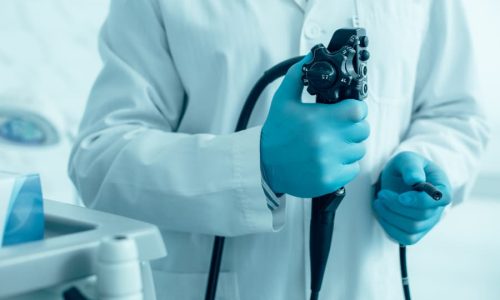
A bronchoscopy is a minimally invasive procedure that lets physicians look inside a patient’s lungs and airways. It relies on the use of a bronchoscope, which is a long, thin tube with a light and a camera mounted on the end. Bronchoscopes come in two types:
- Flexible: The bronchoscope tube is bendable. This type is used more often because it is easier to move down the airway and causes less soreness. Flexible bronchoscopes are used to examine the airways, take tissue samples for a lung biopsy, or suction fluids.
- Rigid: The bronchoscope tube is firm and not bendable. This type is most often used when the patient has a large object obstructing the airway. It also gives the physician greater control when performing difficult procedures, such as placing stents or treating a tumor.
The bronchoscope is passed through the patient’s nose or mouth, down the throat, and into the trachea (windpipe) and lungs. The light illuminates the airways while the camera provides a real-time video feed that the doctor uses to examine the airways. Special tools may be passed down the hollow tube, such as a cutting implement for biopsy, a probe, or a laser.
Why Is a Bronchoscopy Performed?
Bronchoscopies are most often performed as diagnostic procedures. A bronchoscopy may be requested if the patient is experiencing symptoms of a lung, trachea, or throat condition. The procedure can pinpoint the cause of lung cancer signs and symptoms such as:
- A persistent cough
- Coughing up blood
- Severe and worsening chest pain
- Shortness of breath
- Wheezing or harsh breathing
- Voice hoarseness
- Shoulder or back pain
- Recurring bronchitis or pneumonia
Beyond providing an initial look at the lungs and airways, bronchoscopy can be employed for many other medical functions, including:
- Medical imaging follow-up: If an X-ray or computed tomography (CT) scan has detected an unusual mass, a bronchoscopy may be requested to allow for closer examination.
- Lung biopsy: A bronchoscopy can be used to collect samples of lung tissue or fluids. The samples are examined under a microscope to look for lung cancer or an infection.
- Blockage removal: If a patient’s respiratory passageways are blocked, bronchoscopy may be used to loosen or remove the obstruction without requiring surgery.
- Stent placement: Bronchoscopy may be used to place a stent, a small, hollow tube that holds open airways that have narrowed due to a tumor, blockage, or infection.
- Treatment monitoring: If the patient is receiving treatment for lung cancer or another respiratory condition, bronchoscopy may be used assess the effectiveness of treatment and look for any new changes in the lungs.
Endobronchial ultrasound (EBUS): A bronchoscope with a built-in probe can be used to obtain ultrasound images inside the chest. , H2: How Do You Prepare for a Bronchoscopy?
Before a bronchoscopy, you should give your healthcare provider a list of all the medicines you take. This includes prescription medications, over-the-counter medications, vitamins, supplements, and herbs. Patients may need to stop certain medicines, especially blood thinners, for a few days before the procedure. This ensures your safety, as bronchoscopy sometimes can cause bleeding.
In addition to stopping medications, you may also be asked to fast before the procedure. This means avoiding all food and drink for a certain amount of hours – which your provider will specify — before the procedure.
On procedure day, wear something comfortable and easy to remove. You’ll be asked to take off your clothes and put on a gown. You may also be asked to remove any dentures, removable bridges, hearing aids, contact lenses, or glasses. Finally, arrange transportation with a friend or family member, as it won’t be safe to drive home until the sedative that you will receive wears off.
What Should You Expect During the Bronchoscopy?
Bronchoscopy is usually performed in a clinical procedure room or hospital operating room. The whole appointment, including preparation and recovery, takes around four hours. The procedure itself usually takes 30 to 60 minutes and follows these steps:
- You are asked to lie down on a hospital bed with your arms at your sides.
- A sedative will be administered through a vein to help you relax. The sedative will make you feel sleepy, but you will still be awake and able to answer questions.
- An anesthetic is sprayed into your throat or rubbed into your nose to numb the area.
- The bronchoscope is placed in your nose or mouth, then slowly advanced down the back of your throat. It may feel uncomfortable, but it should not hurt.
- The doctor uses the bronchoscope to examine your airways and, in some cases, to take tissue or fluid samples. Once finished, the bronchoscope is removed.
After the bronchoscopy, you will be taken to a recovery room and monitored. This is done to ensure that the procedure has gone well and that you are not experiencing any complications. Your mouth and throat will feel numb, and you won’t be allowed to eat or drink until the numbness wears off.
Bronchoscopy Recovery and Results
Once the doctor confirms that it is safe, you may go home. While you can return to normal activities, many patients feel tired after a bronchoscopy and prefer to spend the day resting. You may also have a sore throat, cough, or muscle aches. Warm water, soft foods, and throat lozenges may help alleviate the discomfort, though you should wait until the numbness wears off completely before eating or sucking a lozenge. Call the doctor if you experience symptoms such as:
- A fever lasting for more than 24 hours
- Increasing chest pain
- Trouble breathing
- Coughing up large amounts of blood
Results from a simple bronchoscopy are ready within a few days after the procedure. If a biopsy was taken, then results may take longer to arrive. Once the results are in, your doctor will contact you to discuss the findings and whether any further tests will be necessary. If cancer or another lung disease is found, you may also discuss the first steps for treatment.
Find Lung Cancer Care Near You in NJ, CT, MD, and the Washington, D.C., Area
Bronchoscopy is an invaluable tool for lung cancer diagnosis. If lung cancer is found, patients can receive state-of-the-art care at Regional Cancer Care Associates. We have more than 20 locations near you in New Jersey, Connecticut, Massachusetts, and the Washington, D.C., area, enabling patients to receive care close to home. Contact us to learn more about bronchoscopy or to request an appointment to discuss your lung cancer treatment.