What Is Cancer Metastasis?
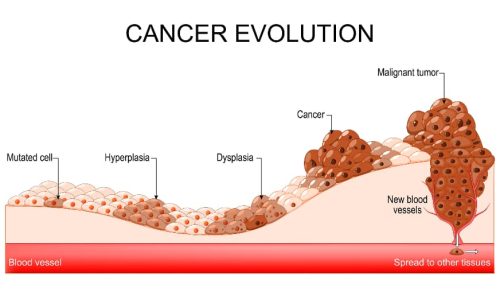
Part of what makes cancer dangerous is its ability to spread. Cancer cells do not remain together as well as normal cells do. If a tumor breaks through the outer lining of the organ it formed in, some cells may be carried through the bloodstream or lymphatic system until they lodge in another part of the body. Once established in their new location, the cells can multiply there to form a secondary tumor. This process is called metastasis.
Cancer staging is a standardized method of describing how far cancer has spread beyond its point of origin. Staging systems are unique to each cancer type. The stages of prostate cancer are as follows:
- Stage I (Localized): The cancer is small and located only in the prostate gland.
- Stage II (Localized): The cancer is larger and may be in both of the prostate’s two lobes, but is still completely contained to the prostate gland.
- Stage III (Locally Advanced): The cancer has broken through the prostate gland lining and may have spread into nearby lymph glands or into the seminal vesicles, the tubes that carry semen.
- Stage IV (Metastatic/Advanced): The cancer has spread (metastasized) outside the prostate gland and into the lymph nodes, bladder, bones, or other parts of the body.
Cancer that has metastasized is much harder to treat. Stage I and II tumors generally can be completely removed with surgery. Five-year relative survival rates in these stages are close to 100%. Once cancer has spread outside the prostate gland, however, it requires more aggressive treatment, and those treatments will be less effective. The five-year relative survival rate for Stage IV prostate cancer is only 30%, although this percentage has been rising in recent years as new treatments become available.
How Fast Does Prostate Cancer Spread?
Although all prostate cancers have the potential to spread, there is wide variation from case to case in terms of whether and how quickly this spread occurs. Some cancers take years or even decades to develop fully. Others spread rapidly, spawning secondary tumors in less than a year. After diagnosing prostate cancer, physicians assess several factors to determine its aggressiveness. These factors help classify the cancer as low, intermediate, or high risk:. Factors include:
Prostate-Specific Antigen (PSA) Levels and Velocity
Prostate-specific antigen (PSA) is a protein that is naturally produced by the prostate gland. Elevated PSA levels can indicate an enlarged or cancerous prostate. Measuring PSA levels, which can be done with a simple blood test, is one way to detect prostate cancer early and to predict how quickly the cancer will spread. PSA velocity refers to the rate at which PSA levels are rising. If PSA levels increase very sharply, such as by doubling in less than 10 months, the cancer is likely aggressive.
While PSA levels are one way to predict the cancer’s rate of spread, they are not always reliable. Some types of prostate cancer, including ductal adenocarcinomas and prostatic sarcomas, do not affect PSA levels, meaning that this approach cannot be used to detect or monitor their growth.
Gleason Score
The likely rate of a prostate cancer’s spread can also be assessed by use of the Gleason score. This score is determined by performing a prostate biopsy. Pathologists grade each tissue sample collected at biopsy on a scale of 1 to 5 based on how mutated the cancer cells appear. They then add the grades of the two largest cancer cell samples together to generate the overall Gleason score. Results can be understood as follows:
- Grade 6: Cancer cells are well differentiated, meaning that they look mostly similar to healthy cells. This is also known as low grade prostate cancer.
- Grade 7: Cancer cells are moderately differentiated, meaning that they look only somewhat similar to healthy cells. This is also known as intermediate grade.
- Grade 8-10: Cancer cells are poorly differentiated, meaning that they look very different from healthy cells. This is also known as high grade.
In general, a higher Gleason score corresponds to a more aggressive cancer. It also indicates a higher risk of recurrence, meaning that the cancer is more likely to come back after treatment.
Cancer Type
Prostate cancer type is another major factor in determining how quickly cancer spreads. The most common type of prostate cancer, called acinar adenocarcinoma, is slow to spread. Other types, however, can be much more aggressive. These types may have earlier access to the blood and lymphatic streams, enabling a faster spread. In other cases, their cells may be extremely abnormal with a high chance of breaking away. Aggressive types of prostate cancer include:
- Ductal adenocarcinoma
- Small cell neuroendocrine carcinoma
- Sarcomatoid carcinoma
- Squamous cell sarcoma
- Transitional cell carcinoma
Fortunately, these highly aggressive cancer types are also rare. Together, they account for less than five percent of all prostate cancer cases.
Treatment Options Based on Prostate Cancer Growth
Not all cases of prostate cancer need immediate treatment. If a man has been diagnosed with slow-growing, low-risk prostate cancer in an early stage, oncologists may recommend active surveillance. This approach focuses on monitoring the cancer’s growth over time. The physician will request regular testing, which may include:
- PSA blood tests every three to six months
- Prostate ultrasounds or digital rectal exams (DREs) once or twice a year
- Prostate biopsies every one to two years.
Active surveillance enables patients to avoid the side effects of treatment until it becomes necessary. If tests show the cancer growing or becoming more aggressive, patients and oncologists can adopt a more active approach. Treatment options include:
If and when active treatment becomes necessary, the patient’s oncologist will help him understand the options and make an informed decision on the approach most likely to provide a positive outcome.
The Importance of Prostate Cancer Screening
No matter what treatment approach is chosen, an early start is the best way to pursue good results. Early-stage prostate cancers can be treated successfully with a variety of methods. As the cancer spreads, however, options narrow and become less effective. Metastatic prostate cancer, or cancer that has spread to distant parts of the body, cannot be fully cured. However, oncologists often can manage these cancers for several years.
This is why prostate cancer screening is so important. Routine screening tests, such as a blood test to check PSA levels, can detect cancer before it starts to cause symptoms. Treatment can begin early, before the cancer spreads, giving patients better options for a higher chance of a full recovery.
Find Expert Prostate Cancer Care Near You in NJ, CT, MA, and the Washington, D.C., Area
Prostate cancer is among the most common types of cancer affecting men. Fortunately, if it is identified early, it is also one of the most treatable. Regional Cancer Care Associates delivers prostate cancer treatment and education at over 20 locations near you in New Jersey, Connecticut, Massachusetts, and the Washington, D.C., area. To learn more about our services or to ask questions about how fast prostate cancer spreads, contact us today.