What Types of FOBT Are Available?
Many conditions, including colon cancer, polyps, and hemorrhoids, can cause occult blood. This makes FOBT a useful tool for detecting issues with the colon. Three different types of FOBT have been approved by the U.S. Food and Drug Administration (FDA). Each test uses slightly different methods to detect blood, making them useful in different situations. Approved types of FOBT include:
Guaiac FOBT
A guaiac FOBT, also called a gFOBT, tests for heme in a stool sample. Heme is a primary component of hemoglobin, a protein found in red blood cells. Samples from two or three different bowel movements are taken using applicator sticks. The samples are smeared onto guaiac paper, to which hydrogen peroxide is added. The paper will turn blue if heme is present.
To avoid false positives, patients may need to avoid foods that contain heme for a few days before testing. This includes red meat, poultry, and seafood. Other foods that may trigger false positives include vitamin C supplements, iron supplements, turnips, and horseradish.
Fecal Immunochemical Testing
Fecal immunochemical testing, also called FIT or iFOBT, uses antibodies to detect hemoglobin. Stool is scraped with a small probe to collect a sample that is inserted into a bottle. The sample is mixed with a liquid containing antibodies that attach themselves to the hemoglobin protein. A specialized machine measures the antibody reaction to determine whether hemoglobin is present.
A FIT does not require dietary changes before testing, but certain medications may affect test results. Patients should consult with their healthcare provider about medications to avoid before the test.
Stool DNA Test
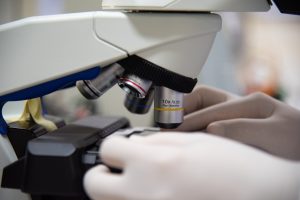
Stool DNA tests, or FIT-DNA, combine the FIT with an additional test for traces of altered DNA. Bowel movements can scrape cells away from the colon lining, especially if the cells are abnormal due to cancerous changes. Laboratory testing can extract these cells from the stool. The traces are then evaluated under a microscope to determine whether their DNA is abnormal.
Like the standard FIT, stool DNA tests do not require dietary changes. However, patients may need to pause or modify certain medications before the test.
How Often Should Patients Be Screened for Colon Cancer?
According to recommendations by the American Cancer Society, adults with an average risk for colorectal cancer should start screening at age 45. Doctors may suggest getting screened earlier if a patient is at an increased risk due to their health history, inherited conditions, or lifestyle. After age 76, continued screening depends on the person’s preferences and overall health condition.
For FOBT screenings, the gFOBT test is recommended once a year. The FIT-DNA test is recommended once every three years. When collecting samples for screening, individuals should carefully follow test kit instructions and use kits before they expire.
What Do Fecal Occult Blood Test Results Mean?
A positive fecal occult blood test result means that blood was found in the stool. This does not necessarily indicate cancer. Many conditions may cause gastrointestinal bleeding, including:
- Anemia
- Inflammatory bowel disease (IBD)
- Ulcers
- Hemorrhoids
- Anal fissures
- Polyps
If an FOBT returns positive results, additional testing is usually required to confirm a diagnosis. If it returns negative results, then no blood was found, and no further testing is needed at that time. Inconclusive results mean that the presence of blood could not be proven or disproven. It usually indicates an issue with sample collection, and the test may need to be repeated.
Are Black Stools a Sign of Cancer?
Stools can appear black or tarry-looking if they contain significant amounts of blood. Black stools have a variety of other possible causes as well, many of which are harmless. For example, the following foods and medications can make stool appear darker:
- Iron supplements
- Black licorice
- Dark chocolate
- Blueberries
- Dark food coloring
- Medications containing bismuth
Patients should always consult their primary care provider about changes in their bowel movements, even if they believe they know the reason behind them and especially if they are pronounced, arose suddenly, or have persisted for an extended period. Prompt evaluation will enable a doctor to address your concerns and to provide a treatment plan
Other Types of Colorectal Cancer Screening
The FOBT is a useful tool for detecting colon cancer, but it is not the only option. Gastroenterologists take multiple approaches to colon cancer screening depending on the patient’s risk factors and preferences. Other options include:
Colonoscopy
Considered the standard for colon cancer screening, colonoscopy uses a long, thin, tube-like instrument with a camera lens on one end. This instrument, called a colonoscope, is inserted into the patient’s anus to examine the full length of the colon lining.
Patients need to perform a bowel cleanse to ensure the colon is clear before testing. A bowel cleanse typically includes following a liquid-only diet and taking strong laxatives. On testing day, anesthesia may be used to keep the patient asleep or deeply sedated. The test takes between 30 and 60 minutes to complete. Afterward, patients typically take a day off from work to rest and recover.
Flexible Sigmoidoscopy
Flexible sigmoidoscopy is performed similarly to a colonoscopy but uses a shorter instrument to examine only the lower portion of the colon. It takes less time to complete, requiring only 15 to 20 minutes for most patients, and it requires a less intensive bowel cleanse. The test also does not necessitate anesthesia, though a sedative may be provided to help the patient relax.
Virtual Colonoscopy
Also known as CT colonography, a virtual colonoscopy uses X-ray imaging to take pictures of the inside of the colon. It requires a complete cleansing, like a colonoscopy, but it is non-invasive and does not require anesthesia or a sedative. As an added benefit, CT colonography may also be used to check the kidneys, liver, spleen, pancreas, or other nearby organs for issues.
Find Comprehensive Colon Cancer Care Near You in NJ, CT, MA, and the Washington, D.C., Area
Screening tests, including the fecal occult blood test, are the first line of defense against colon cancer. By following screening recommendations, patients secure their chance at early detection and successful treatment.
If you or a loved one is diagnosed with colon cancer, find treatment near you in New Jersey, Connecticut, Massachusetts, and the Washington, D.C., area. Specialists at Regional Cancer Care Associates provide care to more than 30,000 new patients and 265,000 established patients each year. RCCA physicians offer patients innovative therapies, including immunotherapies and targeted therapy, cutting-edge diagnostics as well as access to approximately 300 clinical trials in community-based centers close to home.
Frequently Asked Questions About Fecal Occult Blood Tests (FOBT)
Who is a good candidate for Fecal Occult Blood Testing?
The FOBT is typically recommended for individuals older than age 45 and are at low risk of colon cancer.
What happens if my FOBT comes back positive?
If an FOBT is positive, the patient’s physician will request additional tests, such as a colonoscopy or CT colonography.
Can colon cancer be asymptomatic?
Early stages of colon cancer are often asymptomatic, making it difficult to detect. Colon cancer screening helps patients detect cancer before symptoms develop.
What are the early signs of colon cancer?
The early symptoms of colon cancer include changes in bowel habits, abdominal pain or bloating, unexplained weight loss, iron deficiency, and blood in the stool.