
How Does Breast Cancer Affect Mental Health and Anxiety?
After a breast cancer diagnosis, it’s natural to feel a host of emotions, ranging from negative feelings to hope. Understanding how breast cancer and mental
HIPAA Alert: Potential Data Breach Learn More
Questions on Oncology, Hematology and/or Infusion Clinical Services due to COVID-19 Crisis – CALL 833-698-1623
Important Information for Our Patients Regarding the Coronavirus.
RCCA Providing Area Cancer Patients with Access to Care During Coronavirus Outbreak
RCCA Offering Patients Virtual Visits During Coronavirus Pandemic
It’s completely understandable to feel concerned after a scan reveals a lung nodule. A new lung nodule raises questions about treatments, further testing, and whether your health is at risk. Fortunately, lung nodules found on CT scans are not always malignant.
Regional Cancer Care Associates (RCCA) is a network of more than 90 medical oncologists and hematologists that provides diagnostic services and treatment for various cancers and blood disorders, including lung cancer, at more than 20 locations near you throughout New Jersey, Connecticut, and Massachusetts. Here, we explain what lung nodules are, what the Lung-RADS score means, and when a nodule may indicate cancer.
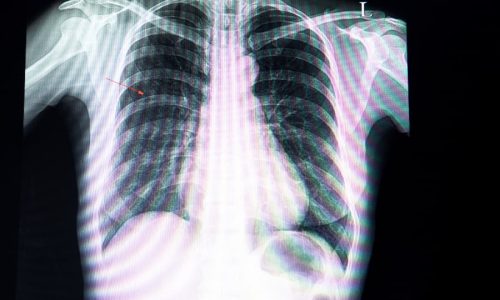
A pulmonary nodule, also called a lung nodule, is a small, round spot of dense tissue that is found in the lung during computed tomography (CT) scanning. It may be solid or translucent, smooth or rough-edged, circular or oval. In some cases, lung nodules are detected during dedicated lung cancer screening scans. More often, however, they are found incidentally on CT scans done for other reasons than cancer detection, and can have multiple possible causes, including:
Lung nodules are common. Each year, CT scans detect over 1.5 million lung nodules in the United States. Fortunately, up to 95% of these nodules are benign, with only a small percentage being a sign of lung cancer.
To assess whether a nodule could be malignant, physicians carefully examine its specific features. If any concerning characteristics are present, additional monitoring or diagnostic tests may be recommended to determine if the nodule is cancerous.
The first risk determinant is size. In general, the larger the nodule is, the more likely it is to be cancer. Physicians classify nodules into one of three size categories:
Dense tissue over 30 mm (3 cm) in diameter is classified as a mass, not a nodule.
The second characteristic is density. Nodules can be solid, translucent, or a mix of both:
Pure ground-glass nodules are the least likely to be malignant. Solid nodules are slightly more likely, while part-solid nodules have the highest risk of being or becoming cancer.
Third, physicians evaluate the nodule’s shape. Lung nodules may have smooth surfaces or be covered with uneven lobules (rounded lumps) or spicules (spikes or points). Round nodules are most likely benign, while lobulated and spiculated nodules are almost always cancerous.
Fourth, physicians consider the nodule’s location. Lung adenocarcinomas are most likely to develop in the upper lobes, making nodules found there more concerning for malignancy. They may also raise concern if located near a major airway. Peripheral or lower-lobe nodules, meanwhile, are less likely to be problematic.
The person’s lung cancer risk also influences the evaluation. If the individual has a higher than average risk of getting lung cancer, then a new nodule may be considered suspicious, even if it does not have suspicious characteristics.
Significant lung cancer risk factors include:
Finally, physicians evaluate how quickly a nodule grows over time, making follow-up scans essential. By comparing images from different time points, doctors can determine whether the nodule remains stable or is changing in size or appearance. Stability over time is a reassuring sign, while rapid growth or noticeable changes may indicate malignancy.
The Lung-RADS (Reporting and Data System) was developed by the American College of Radiology to evaluate low-dose CT lung cancer screenings. It assigns a score from 0 to 4 according to the likelihood that a finding is cancerous. The standardized system helps radiologists determine what follow-up is needed.
Lung-RADS scores can be summarized as follows:
|
Lung-RADS Score |
Risk Level |
Next Steps |
|
0 |
N/A (scan unclear or incomplete) |
Repeat the scan for clearer results |
|
1 |
Negative |
None |
|
2 |
Less than 1% |
Routine annual screening |
|
3 |
1% to 2% |
Six-month CT scan follow-up |
|
4A |
5% to 15% |
Three-month CT scan follow-up |
|
4B |
More than 15% |
Additional imaging or tissue biopsy |
|
4X |
More than 15% |
Prompt tissue biopsy |
After assigning a Lung-RADS score, it is time to discuss next steps. Although pulmonary nodules are most likely benign, follow-up screening is usually recommended to track their growth and rule out a malignancy. The screening type depends on the level of cancer risk:
In some cases, patients can express preferences for specific testing methods. It’s important to discuss these options with your physician to ensure decisions are tailored to your health, cancer risk, and expectations for testing.
If your pulmonary nodule requires follow-up, get answers at Regional Cancer Care Associates (RCCA). RCCA is one of the nation’s largest oncology networks, offering advanced care at more than 20 locations near you in New Jersey, Connecticut, and Massachusetts. Convenient locations help patients access second opinions, diagnostics, and state-of-the-art lung cancer treatments without needing to travel far. Contact RCCA online or call 844-346-7222 to learn more about the seriousness of a lung nodule detected on a scan or to request an appointment.
What are pulmonary nodules?
A pulmonary nodule is a round or oval spot of dense tissue on the lung. Nodules are frequently discovered by accident on chest X-rays or CT scans for other conditions, and may be caused by scar tissue from past infections, inflammation, benign tumors, or early-stage lung cancer.
Does a lung nodule mean I have cancer?
No, a lung nodule does not mean you have cancer. While nodules may be caused by early-stage cancer or lung metastases, most nodules are benign. Your physician may recommend monitoring the nodule, especially if it is large or has regular borders. However, surveillance does not mean that the nodule is malignant. It only means that your physician wants to rule out the possibility.
What size lung nodule should I be worried about?
Nodules under 8 to 10 mm in diameter are less likely to be malignant. Those that are over 10 mm across may be more concerning. Anything over 30 mm (3 cm) across is classified as a mass rather than a nodule.
What is the Lung-RADS scoring system?
The Lung-RADS scoring system is a standardized classification tool for evaluating CT lung cancer screening scans. It ranks findings by cancer probability, with 1 indicating a negative scan with no evidence of cancer and 4 indicating suspicious findings that require further testing.
How often do I need a follow-up CT scan for a lung nodule?
Follow-up timing depends on the nodule’s size, density, and appearance, as well as the patient’s cancer risk. Small or low-risk nodules may need follow-up scans every 12 months, if any. Medium-to-large or high-risk nodules typically require imaging every three to 12 months, and doctors may order additional tests to determine whether the nodule is cancerous.
What is the difference between a solid and a ground-glass nodule?
The difference between a solid and a ground-glass nodule is how they appear on a CT scan. Solid nodules appear as white spots that completely obscure the structures beneath them. Ground-glass nodules, also called GGNs, appear as gray or hazy patches. Blood vessels and bronchial structures are still visible through GGNs. While both types are most likely benign, persistent GGNs and part-solid nodules are slightly more likely to become malignant.
Should I see a lung cancer specialist about my nodule?
You don’t always need to see a cancer specialist about a nodule. In most cases, patients start with their primary care provider or a pulmonologist (lung doctor). These doctors will evaluate the nodule’s size, growth rate, and risk factors to decide whether you need a lung cancer specialist.
How do I manage anxiety while waiting for follow-up lung nodule scans?
It is normal to feel anxious while waiting for test results. You can reduce anxiety by setting expectations, making appointments early in the day, and avoiding your patient portal until the physician is ready to discuss the results. Relaxation techniques, distractions, and a supportive loved one can also help you cope with anxiety about follow-up scans.
For more information or to schedule an appointment,
call 844-346-7222. You can also schedule an appointment by calling the RCCA location nearest you.
After a breast cancer diagnosis, it’s natural to feel a host of emotions, ranging from negative feelings to hope. Understanding how breast cancer and mental

Being diagnosed with metastatic prostate cancer can be intimidating. Many patients have questions about their treatment options, symptom management, and what the future will hold.

It’s natural to feel a host of emotions after a lung cancer diagnosis. Patients may experience everything from depression, anxiety, and guilt to hope and




Regional Cancer Care Associates is one of fewer than 200 medical practices in the country selected to participate in the Oncology Care Model (OCM); a recent Medicare initiative aimed at improving care coordination and access to and quality of care for Medicare beneficiaries undergoing chemotherapy treatment.