HIPAA Alert: Potential Data Breach Learn More

How Cancer Patients Can Enlist Exercise in Their Fight for Well-Being: Insights from 2 RCCA Oncologists


The emotional challenges of living with cancer can include a sense of helplessness.
Some people undergoing treatment may feel that they have been relegated to the role of spectator, limited to watching from the sidelines as they wait to see which will prevail – the disease that threatens their life or the therapies being administered to combat it.

May Abdo-Matkiwsky, DO, has good news for people burdened by that sentiment. The board-certified medical oncologist says, “We all want to feel that we are in control of our lives, so I entirely understand why a diagnosis of cancer and the journey it sets in motion can leave a person feeling overwhelmed and without agency, particularly in the first days after receiving the news. However, there actually is a great deal that people can do to pursue the best possible outcomes and to maintain their quality of life.”

Dr. Abdo-Matkiwsky explains that this proactive approach starts with being a full partner with the oncologist in selecting and implementing a treatment plan individualized to your specific situation and needs. “Share your concerns, questions, goals, and preferences with your doctor, and work closely with the oncologist every step of the way,” she says. Beyond that, she adds, adopting healthy exercise and nutritional habits following diagnosis can reduce the chances of cancer recurrence following treatment, enhance quality of life, and even extend survival.

“There is clear, substantial, and growing scientific evidence that diet and exercise can benefit people undergoing active treatment for cancer and longer-term survivors,” says the physician, who practices at the Sparta, NJ, office of Regional Cancer Care Associates (RCCA), one of the nation’s largest networks of oncology specialists. RCCA treats patients at more than 20 locations near you in New Jersey, Connecticut, Massachusetts, and the Washington, D.C., area.

Studies Show Benefits of Exercise for Cancer Survivors

In terms of exercise (the role of diet is addressed in a companion article), Dr. Abdo-Matkiwsky underscores her point by citing recent studies involving the four most common cancers:

  • Breast cancer survivors who met general guidelines for aerobic health cut their risk of death in half and reduced their risk of cancer recurrence by 20%.
  • Colorectal cancer (CRC) survivors who engaged in a 3-year structured exercise program after completing chemotherapy were significantly less likely than other CRC survivors treated with chemotherapy to have died or to have had a recurrence of their colorectal cancer after 7.9 years of follow-up.
  • Physical activity following a diagnosis of lung cancer was associated with a 15% lower risk of death from any cause and an 11% lower risk of death from lung cancer compared to not engaging in physical activity in a study involving more than 23,000 people.
  • An analysis of six studies on exercise in men with prostate cancer found that physical activity was associated with a 31% reduction in relative risk of death from the disease.

Dr. Abdo-Matkiwsky adds that physical activity also has been shown to reduce fatigue, anxiety, and depression in people with cancer. She says, “The idea that exercise can help with fatigue is counterintuitive. When we’re tired, our natural inclination is to rest. Getting up and getting moving can be the last thing on your mind. And, of course, if patients are experiencing debilitating fatigue the day after having received chemotherapy or another treatment, they need to take it easy and recover their strength. However, the evidence documents that at the appropriate time and in a sensible manner, exercise can help boost energy in people being treated for cancer.” 

Exercise Guidelines for Cancer Patients and Survivors

How can people who are being treated for cancer or who have completed active treatment obtain the benefits that physical activity offers?

Bhavesh Balar, MD, a board-certified medical oncologist and hematologist practicing at RCCA’s office in Freehold, NJ, notes that the American Cancer Society (ACS), the American College of Sports Medicine (ACSM), and the National Comprehensive Cancer Network (NCCN) all have issued evidence-based guidelines for cancer survivors. “While these are general guidelines that need to be tailored to each person’s specific situation in consultation with his or her oncologist, they provide a great framework,” Dr. Balar says. He notes, for example, that the American Cancer Society recommends that cancer survivors engage in one of the following:

  • From 150 to 300 minutes per week of moderate-intensity activity during which you can talk but not sing (for example, brisk walking, yoga, leisurely bicycling)
  • From 75 to 150 minutes per week of vigorous-intensity activity where you have trouble talking or are out of breath (examples include running, swimming, singles tennis)
  • A combination of the two intensities.
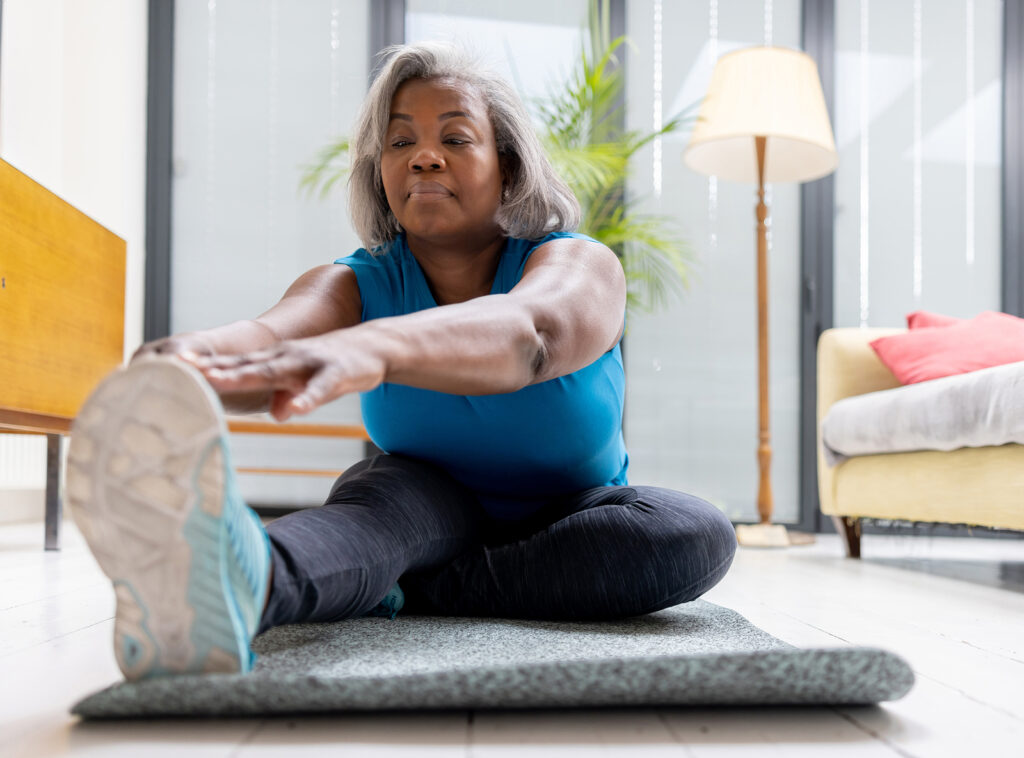
Cancer survivor exercising
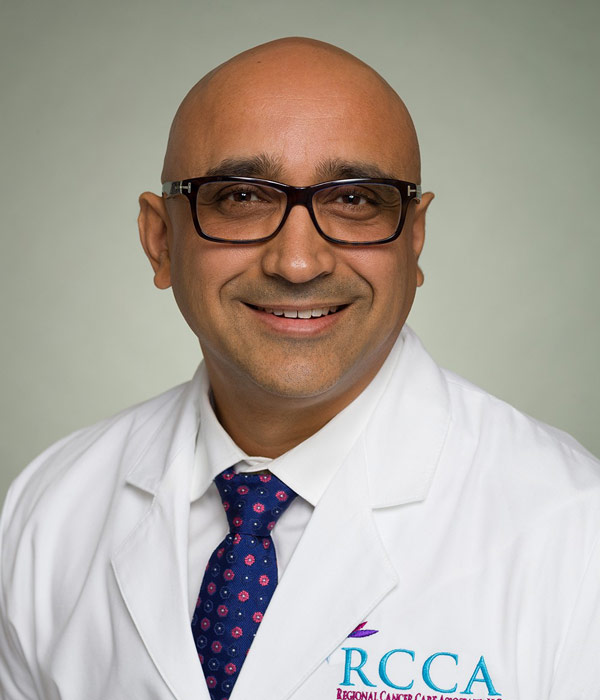
Portrait of May Abdo-Matkiwsky, MD
“There is clear, substantial, and growing scientific evidence that diet and exercise can benefit people undergoing active treatment for cancer and longer-term survivors.”

 -- May Abdo-Matkiwsky, DO
Portrait of Bhavesh Balar, MD
“Select physical activities that you enjoy. The more you like doing something, the more likely you are to keep doing it. That’s just human nature. Similarly, the better that something fits into your daily or weekly schedule, the more likely it is to maintain a place in that schedule.”

 -- Bhavesh Balar, MD

In addition, being treated for cancer should engage in muscle-strengthening activities two or more days a week (examples include using hand weights or exercise bands and body weight activities such as push-ups or squats).

“The National Comprehensive Cancer Network has issued similar recommendations and also stresses the importance of stretching major muscle groups, core exercises and balance training, engaging in general physical activity daily, and avoiding prolonged sedentary behavior,” Dr. Balar notes.

The oncologist adds that the American College of Sports Medicine has issued physical activity guidelines that focus on specific goals for people with cancer, such as dealing with fatigue, maintaining health-related quality of life, and addressing anxiety and depression. (See accompanying box, “Resources on Exercise for Cancer Survivors.”) “Additionally, earlier this year the ACSM issued new exercise guidelines specifically designed for older cancer survivors. These guidelines meet a pressing need, because advances in cancer treatment mean that many people are living for 10 years, 20 years, or longer following treatment and need evidence-based guidance on how to maintain their health.”

4 Tips for Making Movement Matter

Beyond following the recommendations of respected organizations, the two RCCA oncologists say it’s important to keep a few common-sense rules in mind.

  1. Check with your oncologist before starting a new exercise regimen. “The guidelines provide valuable general direction, but their recommendations must be tailored to each person’s specific situation. The nature and intensity of an exercise regimen for someone who is three years past active treatment is going to differ from that of someone undergoing chemotherapy. It’s not that you can’t exercise while receiving treatment – in fact, we encourage it to the extent that is it safe and within a person’s abilities – but it requires a thoughtful, realistic approach,” says Dr. Balar.
  2. See what your insurance plan offers. Many insurance plans provide for cancer patients to have one-time consultations or a fixed number of sessions with a physical therapist or exercise physiologist, Dr. Abdo-Matkiwsky notes. She adds that it is important to work with clinicians who have experience developing exercise plans for people with cancer and to provide those healthcare professionals with detailed information about your diagnosis, treatment, overall health, and any mobility problems you are experiencing. “Asking your oncologist to recommend a couple of nearby therapists or exercise physiologists that the doctor knows and trusts is a good idea,” she says.
  3. Select physical activities that you enjoy – and that fit your life. “The more you like doing something, the more likely you are to keep doing it. That’s just human nature,” Dr. Balar says. He adds, “Similarly, the better that something fits into your daily or weekly schedule, the more likely it is to maintain a place in that schedule rather than getting nudged out by other demands.”
  4. Remember that slow and steady wins the race – and that you deserve a little grace. “Moderation is the rule when starting a physical activity regimen,” Dr. Abdo-Matkiwsky notes. She adds that this means beginning at a modest level and gradually increasing the intensity and frequency of exercise as you go, listening to your body along the way. The oncologist emphasizes that not advancing as quickly as you would like, or missing a few days, isn’t cause for discouragement or throwing in the towel. “It’s important to maintain perspective. You aren’t trying out for an NFL team or the Navy Seals. You are taking steps to improve your health and quality of life, and you’re doing so while being treated for cancer or after having completed treatment. You deserve credit for what you’re doing. Believe me when I say that your doctors and nurses give you all the credit in the world for that effort, and you should give yourself some credit, and some compassion, too. If you had a bad day or week, so be it. Start again tomorrow.” 

Find Expert Cancer Care Near You in New Jersey, Connecticut, Massachusetts, and the Washington, D.C., Area

Dr. Abdo-Matkiwsky and Dr. Balar are among 90+ medical oncologists and hematologists who practice with Regional Cancer Care Associates (RCCA), one of the nation’s largest networks of oncology specialists. RCCA has more than 20 locations near you across New Jersey, Connecticut, Massachusetts, and the Washington, D,C., area. RCCA’s cancer specialists see more than 30,000 new patients each year and provide care to more than 265,000 established patients, collaborating closely with those patients’ other physicians. RCCA physicians offer patients innovative therapies, including immunotherapies and targeted therapy, as well as access to approximately 300 clinical trials. In addition to serving patients who have solid tumors, blood-based cancers, and benign blood disorders, RCCA care centers also provide infusion services to people with a number of non-oncologic conditions—including multiple sclerosisCrohn’s diseaseasthma, iron-deficiency anemia, and rheumatoid arthritis—who take intravenously-administered medications.

To learn more, call 844-346-7222 or contact RCCA.

References

American Cancer Society. American Cancer Society Nutrition and Physical Activity Guideline for Cancer Survivors. October 22, 2025.

American College of Sports Medicine. Physical activity guidelines for cancer. November 25, 2019. Available at https://acsm.org/physical-activity-guidelines-cancer-infographic/. Accessed July 26, 2026.

American College of Sports Medicine (ACSM). Trajkovski M, Winters-Stone K. New exercise guidelines for older cancer survivors: meeting the needs of a rapidly growing population. June 26, 2026. Available at https://acsm.org/new-exercise-guidelines-for-older-cancer-survivors/. Accessed July 26, 2026.

Benke IN, Leitzmann MF, Behrens G, Schmid D. Physical activity in relation to risk of prostate cancer: a systematic review and meta-analysis. Ann Oncol. 2018;29:1154-1179.

Chen X, Li J, Chen C, et al. Effects of exercise interventions on cancer-related fatigue and quality of life among cancer patients: a meta-analysis. BMC Nurs. 2023;22:200 https://doi.org/10.1186/s12912-023-01363-0.

Courneya KS, Vardi JL, O’Callaghan CJ, et al. Structured exercise after adjuvant therapy for colon cancer. N Engl J Med. 2025;393(1):13-25.

Fari G, Fai A, Quarta F, et al. The effects of physical exercise on depression in cancer patients: a systematic review. Clin. Pract. 2025;15,180. https://doi.org/10.3390/clinpract15100180.

Kim YW, Kwak KI, Choi A-R, et al. Association of pre-and postdiagnosis physical activity, promotion and maintenance with lung cancer survival: a nationwide cohort study. J Cachexia, Sarcopenia Muscle. 2025; 16:e70092. https://doi.org/10.1002/jcsm.70092.

National Comprehensive Cancer Network.® NCCN Clinical Practice Guidelines in Oncology. (NCCN Guidelines.®) Survivorship. Version 3.2026. July 22, 2026.

Wilson OWA, Matthews CE, Wojcik KM, et al. The effects of post-diagnosis recreational aerobic exercise among breast cancer survivors: a systematic review/meta-analysis. Cancer Epidemiol Biomarker Prevent 2025;34:1252-63.

Resources on Exercise for Cancer Survivors

we are here for you

For more information or to schedule an appointment,
call 844-346-7222. You can also schedule an appointment by calling the RCCA location nearest you.

RELATED ARTICLES

Regional Cancer Care Associates is one of fewer than 200 medical practices in the country selected to participate in the Oncology Care Model (OCM); a recent Medicare initiative aimed at improving care coordination and access to and quality of care for Medicare beneficiaries undergoing chemotherapy treatment.