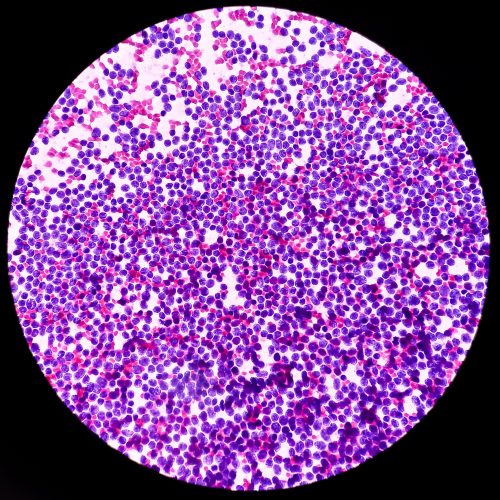
Dr. Chen says that while non-Hodgkin lymphoma tends to be more aggressive than HL, recent years have seen an intense research focus on the disease, resulting in the development of a wide range of therapies. “We have more options than ever to treat the various forms of NHL, such as diffuse large B-cell lymphoma, follicular lymphoma, and T- cell lymphomas. This enables us to develop highly individualized treatment plans that draw on various therapies and combinations and sequences of therapies to tailor treatment to a patient’s specific situation and offer him or her the best outcomes possible,” she says. Dr. Chen adds that options for treating NHL include immunotherapy, targeted therapy, chemotherapy, and radiation therapy. “Several factors help shape our choice of therapeutic regimen, including whether the lymphoma is aggressive or slow-moving, the stage at which it is diagnosed, and the patient’s overall health and treatment preferences,” the cancer specialist says.
Reduced Mortality Rates for Lymphoma
Dr. Aviles notes that the rate of new cases of NHL has declined by about 1% each year over the last 10 years, while the death rate fell by roughly 2% annually from 2013 to 2022, the last year for which complete statistics are available. [American Cancer Society, Key Statistics for Non-Hodgkin Lymphoma] He says, “The reduced mortality that we’re seeing with NHL speaks to the effectiveness of the treatments that we have available to us today and that we’re able to deliver to people at community-based cancer centers, such as the offices of RCCA, close to their homes. However, there is still far more progress to be made. Just under 20,000 people in the United States will die from non-Hodgkin lymphoma this year, [American Cancer Society, Key Statistics for Non-Hodgkin Lymphoma] and while the 5-year survival rates for common forms of NHL are high – such as a 97% rate for follicular lymphoma – those rates decline considerably when lymphoma has spread throughout the body. [American Cancer Society, Survival Rates and Factors That Affect Prognosis (Outlook) for Non-Hodgkin Lymphoma] This underscores the importance of early diagnosis and treatment, and of seeing your physician promptly for evaluation of any concerning symptoms.”
********************************
Dr. Aviles and Dr. Chen are among roughly 100 medical oncologists and hematologists who practice with Regional Cancer Care Associates (RCCA), one of the nation’s largest networks of oncology specialists. RCCA has more than 20 locations near you across New Jersey, Connecticut, Massachusetts, and the Washington, D.C., area. RCCA’s cancer specialists see more than 30,000 new patients each year and provide care to more than 265,000 established patients, collaborating closely with those patients’ other physicians. RCCA physicians offer patients innovative therapies, including immunotherapies and targeted therapy, as well as access to approximately 300 clinical trials. In addition to serving patients who have solid tumors, blood-based cancers, and benign blood disorders, RCCA care centers also provide infusion services to people with a number of non-oncologic conditions—including multiple sclerosis, Crohn’s disease, asthma, iron-deficiency anemia, and rheumatoid arthritis—who take intravenously-administered medications.
To learn more about RCCA, call 844-346-7222 or contact RCCA today.