
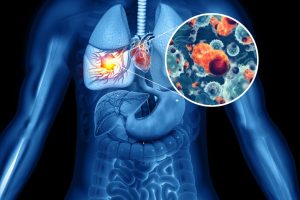
How Mutational Testing Guides Lung Cancer Treatment
Research has identified many clues to how cancer develops. This new understanding of the processes that cause normal cells to become cancerous and then spread
HIPAA Alert: Potential Data Breach Learn More
Questions on Oncology, Hematology and/or Infusion Clinical Services due to COVID-19 Crisis – CALL 833-698-1623
Important Information for Our Patients Regarding the Coronavirus.
RCCA Providing Area Cancer Patients with Access to Care During Coronavirus Outbreak
RCCA Offering Patients Virtual Visits During Coronavirus Pandemic
Not all lung cancers behave the same. Identifying the type of cancer present is essential to planning appropriate treatment. Regional Cancer Care Associates (RCCA) is a network of oncology specialists serving patients in New Jersey, Connecticut, Massachusetts, and the Washington, D.C., area. We provide state-of-the-art treatment and care for all types of lung cancer, including non-small cell lung cancer, as well as other solid tumors and malignant and benign blood disorders. Learn more about non-small cell lung cancer, its symptoms, and available treatment options.
To understand the different types of lung cancer, it is important to first know how the lungs are structured. The lungs are sponge-like organs in the chest that are responsible for respiration. They exchange oxygen and carbon dioxide between the body and the atmosphere.
When a person inhales, air moves from the mouth or nose through the larynx (voice box) and into the trachea (windpipe). At the lungs, the trachea splits into bronchial tubes. The bronchial tubes branch into smaller passageways, called bronchi, and then into very narrow bronchioles. The bronchioles end in clusters of round air sacs called alveoli. Inside the alveoli, oxygen is absorbed for use by the body. Carbon dioxide is also discarded as waste, to be released when the person exhales.
The right lung has three lobes, while the left lung has two. Each lobe contains its own network of bronchi, bronchioles, and alveoli. The lungs are encompassed by a membrane called the pleural sac, which provides support and protection for the delicate structures within.

Non-small cell lung cancer (NSCLC) is the most common type of lung cancer. It is caused by DNA mutations that makes the cells change their behavior, reproducing much more quickly than normal cells. Cancerous cells also look very different from normal cells and often do not function in the same way. As cancerous cells grow at an accelerated rate, they create a mass of abnormal cells called a tumor.
There are many types of lung cancer. Non-small cell lung cancer includes any type that is not small cell lung cancer (SCLC). SCLC cells appear unusually small when studied under a microscope. In contrast, NSCLC cancers feature cells that are average-sized or even larger than usual.
NSCLC is an umbrella term that encompasses many subtypes of lung cancer. Those subtypes are categorized based on several factors, including the type of tissue that they form from and the appearance of cancer cells under a microscope. The primary subtypes include:
Adenocarcinoma of the lung forms from epithelial cells. These cells are responsible for producing mucus, a sticky fluid that coats and protects the inside of the lung. Adenocarcinoma is the most common subtype of NSCLC and is often found in the outer regions of the lung. While adenocarcinoma most often occurs in smokers, this type is also frequently diagnosed in non-smokers.
Squamous cell carcinoma of the lung develops in squamous cells, which are flat cells that line the inside of the airways in the lungs. It is less common than adenocarcinoma and is strongly associated with a history of smoking. Squamous cell carcinoma is most often found in the central part of the lung, near a main bronchus, and can spread quickly.
Large cell carcinoma can form anywhere in the lung and from any type of tissue. It is characterized by large, abnormally shaped cells with prominent nuclei. It is less common than other subtypes of NSCLC, including adenocarcinoma and squamous cell carcinoma, but it is often more aggressive and can grow and spread very quickly.
Non-small cell lung cancers also include several rare subtypes, including adenosquamous carcinomas, sarcomatoid carcinomas, Pancoast tumors, and more. These represent only a fraction of NSCLCs and a tiny percentage of all lung cancers.
Lung cancer is the second most common cancer type diagnosed in the United States, with an estimated 229,410 new cases expected in 2026. It is also the deadliest form of cancer, causing about 124,990 deaths in the U.S. annually. The prevalence of lung cancer is directly linked to the disease’s causes. Most lung cancer cases result from exposure to common environmental hazards. Understanding these lung cancer risk factors is key to prevention and can help identify people who could benefit from screening:
People may also be at higher risk if they have a strong family history of lung cancer, especially if a parent, sibling, or child has had lung cancer. In comparison to smoking and other exposures, however, genetic factors are considered a relatively minor risk factor.
Most cases of lung cancer are detected when people experience symptoms. Unfortunately, symptoms often do not develop until the disease has reached an advanced stage. When symptoms do appear, they can be varied. Many patients mistake lung cancer for a less serious condition, delaying their evaluation, diagnosis, and treatment. It is important for people to learn the signs of lung cancer and know when to see a physician for assessment. Those signs and symptoms:
Even if they are not caused by lung cancer, these symptoms warrant prompt attention. People should seek medical evaluation as soon as possible if they are experiencing any of the symptoms described above.
A timely diagnosis is important for effective NSCLC treatment. The sooner the disease is diagnosed, the earlier treatment can begin, enhancing the chances of favorable outcomes. Accuracy is also essential, however, as different types of cancer respond differently to treatment. Oncologists and pulmonologists (lung doctors) employ a variety of diagnostic techniques to ensure the most accurate diagnosis possible. Methods used include:
Medical imaging is used to detect and characterize abnormalities in the lungs. A chest X-ray is often the first imaging test performed, typically followed by a computed tomography (CT) scan that provides detailed cross-sectional images of the lungs. A positron emission tomography (PET) scan is also useful to identify areas of increased metabolic activity, showing where cancer has spread.
A bronchoscopy uses a tube-like tool with a tiny camera to examine the inside of a patient’s airways. It allows physicians to investigate suspicious areas closely and to collect tissue for biopsy. An endobronchial ultrasound (EBUS) may be performed at the same time. This test uses ultrasound waves to examine the lymph nodes and other tissues near the lungs to determine whether the cancer has spread.
If the patient is coughing up phlegm or mucus, a sputum cytology test may be performed. This test evaluates mucus cells under a microscope to look for cancer cells. It is most effective for detecting cancers in the main airways. It may not catch cancers that form in harder-to-reach parts of the lung.
A lung biopsy involves removing small amounts of fluid or pieces of suspicious tissue for examination. There are multiple types of biopsy procedures:
The tissue or fluid samples are examined under a microscope to look for cancer cells.
Once the biopsy confirms the presence of cancer, molecular testing may be used to identify specific genetic mutations or proteins. These biomarkers help oncologists predict how the cancer will respond to certain advanced treatments, including targeted therapies and immunotherapies, which helps doctors formulate a personalized treatment plan.
In stages I through III NSCLC, the goal of treatment is to cure the cancer or send it into remission. The treatments used depend primarily on the tumor’s size, location, and how far it has spread into neighboring tissue and lymph nodes.
Surgery is the preferred treatment for NSCLC that remains localized to the lungs. A few different procedures may be used depending on the tumor’s size and spread:
Other treatments, such as radiation therapy or chemotherapy, may be used in combination with surgery to kill any cancer cells that could not be resected or removed.
Radiation therapy uses high-energy rays to kill cancer cells. It is an important component of most treatment plans for localized NSCLC. It is often used alongside surgery, either to shrink the tumor before resection or to eliminate any cells that may remain afterward. Radiation therapy may also be used as primary treatment for patients who are not good candidates for surgery.
Chemotherapy uses strong drugs to destroy fast-growing cells, especially cancer cells. The drugs may be administered intravenously or taken orally as a liquid or pill. Chemotherapy often is used with surgery or radiation therapy to kill any cancer cells that remain after treatment. It may also be administered to shrink large tumors before surgery or to control cancer that is beginning to spread.
Immunotherapy harnesses the immune system to fight cancer. It is a recent advancement in NSCLC treatment that is becoming increasingly prevalent in treatment plans. It is most often used after chemotherapy or radiation therapy to kill remaining cells or control metastases, especially for Stage III NSCLC that has begun to spread.
Stage IV non-small cell lung cancer is cancer that has spread or metastasized to distant parts of the body. Instead of focusing on curing the cancer, the goal of treatment with Stage IV disease is to prolong life and alleviate symptoms. Oncologists typically use systemic treatments, such as:
These treatments are often combined with palliative care, which aims to improve the patient’s quality of life. Palliative care includes a variety of services, including emotional counseling, nutritional support, social connections, and end-of-life planning.
Non-small cell lung cancer can be a frightening diagnosis. With cutting-edge care, however, patients can increase their chances of a good outcome. Regional Cancer Care Associates (RCCA) offers treatment at more than 20 locations near you across New Jersey, Connecticut, Massachusetts, and the Washington, D.C., area. Contact RCCA today to learn more about our services or to schedule an appointment.
What are the early signs of lung cancer?
Early signs of lung cancer include a persistent cough, coughing up blood, chest pain, shortness of breath, fatigue, and unexplained weight loss.
What are the main risk factors for lung cancer?
Tobacco smoking, air pollution, exposure to radon gas, and exposure to certain chemicals have all been known to increase lung cancer risk.
Can non-smokers get lung cancer?
Yes, non-smokers can get lung cancer. Though smoking is the most prevalent risk factor, about 10% to 20% of lung cancers occur in people who have never smoked.
What is the role of staging in lung cancer diagnosis?
Staging describes how advanced the cancer is, including how far it has spread. This information influences treatment options and prognosis.
What is the survival rate for lung cancer?
Survival rates for lung cancer vary by stage and type. Early-stage lung cancer has a higher survival rate, while advanced stages have a much lower rate of survival.
If you or a loved one is battling non-Hodgkin lymphoma, you aren’t alone. Our experts at Regional Cancer Care Associates are dedicated to delivering accurate diagnoses and effective treatments. To find out more or make an appointment, get in touch with us at one of our locations throughout New Jersey, Connecticut, Massachusetts and the Washington, D.C., area.
.
Research has identified many clues to how cancer develops. This new understanding of the processes that cause normal cells to become cancerous and then spread

Share on facebook Share on twitter Share on linkedin Share on email Share on print Patient-satisfaction ratings from the Oncology Medical Home survey exceed state

Colon cancer can develop in any person, and it can appear for seemingly no reason at all. Further, colon cancer does not discriminate – it







Regional Cancer Care Associates is one of fewer than 200 medical practices in the country selected to participate in the Oncology Care Model (OCM); a recent Medicare initiative aimed at improving care coordination and access to and quality of care for Medicare beneficiaries undergoing chemotherapy treatment.