HIPAA Alert: Potential Data Breach Learn More
Questions on Oncology, Hematology and/or Infusion Clinical Services due to COVID-19 Crisis – CALL 833-698-1623
Important Information for Our Patients Regarding the Coronavirus.
RCCA Providing Area Cancer Patients with Access to Care During Coronavirus Outbreak
RCCA Offering Patients Virtual Visits During Coronavirus Pandemic
A bronchoscopy is one of the primary tests used to identify lung cancer. By examining the inside of a patient’s airways, physicians can detect tumors and other abnormalities. Regional Cancer Care Associates (RCCA) is one of the largest networks of oncology specialists in the United States. We provide lung cancer treatment at more than 20 locations near you in New Jersey, Connecticut, Massachusetts, and the Washington, D.C., area. Learn more about a bronchoscopy and what to expect during the process.
A bronchoscopy is one of many tests used to diagnose lung cancer. It involves use of a bronchoscope — a thin, tube-like instrument with a small camera and a light — to examine the inside of a person’s airways. Some bronchoscopes are flexible to allow for easy navigation. Others are rigid, making them better for performing complex procedures. Along with diagnosing lung cancer, bronchoscopies are used to identify other problems with the lungs, including:
The bronchoscope is sometimes equipped with a small tool to take tissue samples for a lung biopsy, remove a mucus blockage or foreign body, or place a stent to hold open an airway. It may also have a built-in ultrasound probe for performing an imaging test called endobronchial ultrasound (EBUS). This type of ultrasound can check the lymph nodes near the lungs to determine whether cancer is present there.
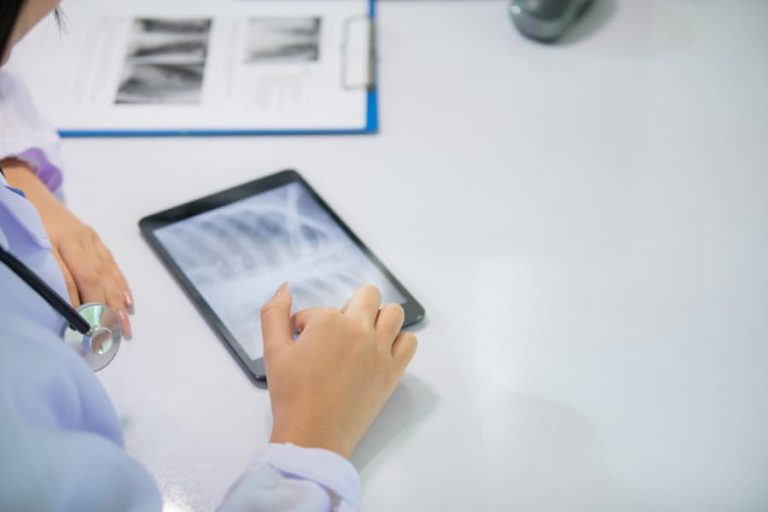
A bronchoscopy is a versatile test that is used for a variety of applications, including diagnosing, monitoring, or treating a lung condition. Some reasons to have a bronchoscopy include:
Many patients undergo bronchoscopy because they are experiencing symptoms that affect their lungs. If the patient has breathing problems or a persistent cough or irritation, a bronchoscopy may be used to determine the cause. Common signs and symptoms of lung cancer that might prompt a doctor to perform bronchoscopy include:
While these symptoms can be indicators of cancer, they may also be caused by other lung conditions, including bronchitis, asthma, lung infections, and chronic obstructive pulmonary disease (COPD). While not cancerous, many of these conditions are still serious. Patients should always speak with their physician about symptoms that affect their breathing.
Not all lung cancers cause symptoms in their early stages. Before symptoms develop, cancer may be detected using medical imaging. For example, a current or former smoker may have had abnormal results on lung cancer screening with low-dose computed tomography (LDCT). Or a physician may have identified something unusual on an imaging test performed for unrelated reasons. In such cases, bronchoscopy may be used to examine the abnormality more closely.
Sometimes, a bronchoscopy may be recommended for patients already diagnosed with lung cancer. In this case, the test is used to check on the cancer’s status and evaluate the effectiveness of treatment. If the cancer continues to spread, or if treatment does not have the desired effect, then the patient and oncologist can discuss an alternative approach.
A patient’s healthcare provider will provide detailed instructions on how to prepare for a bronchoscopy. In general, the procedure does not require extensive preparation. The following steps can help ensure a successful procedure with no complications:
The healthcare provider will likely order a computed tomography (CT) scan before the bronchoscopy. The CT scan helps the provider determine which areas of the lung need examination, allowing for a faster and more effective test.
When patients arrive at the hospital for a bronchoscopy, they will be asked to remove their clothing and put on a hospital gown. They will then lie on a bed or table with their head propped up. A sedative is often used to keep the patient relaxed during a flexible bronchoscopy. General anesthesia is used to put the patient to sleep during a rigid bronchoscopy. The procedure typically follows these steps:
A bronchoscopy takes 30 to 90 minutes to complete, depending on which steps, such as a lung biopsy or stent placement, need to be performed during the procedure. Afterward, the patient is moved to a recovery room until the sedative or anesthesia wears off. Patients usually can go home as soon as they feel alert.
A patient’s healthcare provider will provide detailed instructions on how to prepare for a bronchoscopy. In general, the procedure does not require extensive preparation. The following steps can help ensure a successful procedure with no complications:
The healthcare provider will likely order a computed tomography (CT) scan before the bronchoscopy. The CT scan helps the provider determine which areas of the lung need examination, allowing for a faster and more effective test.
When patients arrive at the hospital for a bronchoscopy, they will be asked to remove their clothing and put on a hospital gown. They will then lie on a bed or table with their head propped up. A sedative is often used to keep the patient relaxed during a flexible bronchoscopy. General anesthesia is used to put the patient to sleep during a rigid bronchoscopy. The procedure typically follows these steps:
A bronchoscopy takes 30 to 90 minutes to complete, depending on which steps, such as a lung biopsy or stent placement, need to be performed during the procedure. Afterward, the patient is moved to a recovery room until the sedative or anesthesia wears off. Patients usually can go home as soon as they feel alert.
Patients may have a numb throat for up to one hour after a bronchoscopy. They should avoid eating or drinking until the numbness wears off. Afterward, they may have a sore throat or a cough for the next 24 hours. Cough drops can soothe the soreness or hoarseness. Most patients feel better by the next day and can return to their normal activities.
Bronchoscopy plays an important role in lung cancer diagnosis and treatment. Regional Cancer Care Associates (RCCA) offers state-of-the-art lung cancer care at more than 20 convenient locations near you in New Jersey, Connecticut, Massachusetts, and the Washington, D.C., area, helping patients receive the latest treatments close to their homes. Contact us today to request an appointment or to learn more about lung cancer treatments available at our offices.
What is a bronchoscopy?
A bronchoscopy is a minimally invasive test that uses a bronchoscope, or a camera mounted on a flexible or rigid tube, to examine the inside of a patient’s airways.
What is a bronchoscopy used for?
A bronchoscopy is used to diagnose a variety of lung diseases, including cancer. It may also be used to monitor treatment or to perform other procedures, such as a lung biopsy or placing a stent.
What are the symptoms of lung cancer?
Lung cancer does not always cause symptoms at first. When symptoms develop, they may include:
People should always speak with their doctor about new symptoms that affect their breathing.
What are the risks of a bronchoscopy?
A bronchoscopy is a very safe procedure, but it still has risks. There is a minor chance of a bronchoscopy causing a hole (perforation) in the airway, irritation or inflammation of the vocal cords, or lung collapse. Patients should always talk with their doctor about potential risks before any medical procedure.